Ugyenda Gorilla Family in Volcanoes National Park, Rwanda
Ugyenda, also spelled Ugenda, is a Kinyarwanda word meaning “on the move” or “mobile,” and the family that carries it has earned the name.
It is a small family, with about eleven members and two silverbacks, and it ranges around the slopes of the Virunga volcanoes, though the sources cannot agree on which ones. That uncertainty is the family’s defining feature, and it shapes how a trek to Ugyenda should be planned.
This guide explains the Ugyenda family and what an unpredictable family means for a visitor. It covers the meaning of the name, the size of the group as sources describe it, a conflict between sources about whether it lives on Bisoke or Karisimbi and whether it is easy or hard to reach, how trackers find a mobile family, how to prepare physically and mentally for a trek that may be short or long, what the hour is like, how the family compares with others and how allocation works, since you cannot book it in advance. Group details change, so figures are given as ranges and flagged where sources conflict.
Ugyenda at a Glance
The disagreement is not an error in most cases. It is a description of a family that moves, and that may have been found in different places by different writers on different days.
| Fact | Detail |
| Name | Ugyenda or Ugenda, meaning “on the move” or “mobile” |
| Reported size | About 11 members, including two silverbacks |
| Territory | The slopes of Bisoke in some sources and the Karisimbi slopes in others |
| Trek difficulty | Described as not very difficult in some sources and as the most difficult to find in others |
| Character | A mobile family that does not settle in one area for long |
| Habit | Moves from place to place, which makes its location on a given day hard to predict |
A Name That Describes a Lifestyle
The word “Ugyenda” comes from a Kinyarwanda word meaning “being on the move,” and it was given to the family because of its habits. Sources say that the group is always on the move from place to place, which makes it harder to trek than families that stay within a smaller range.
All gorilla groups move in search of food, but they differ in how widely and how predictably. Some families have a core area that they return to, and others, such as Ugyenda, cover large distances. For visitors, a family that moves a lot can mean a longer trek on some days and a shorter one on others, and it makes it more important to be prepared for both.
Size and Composition
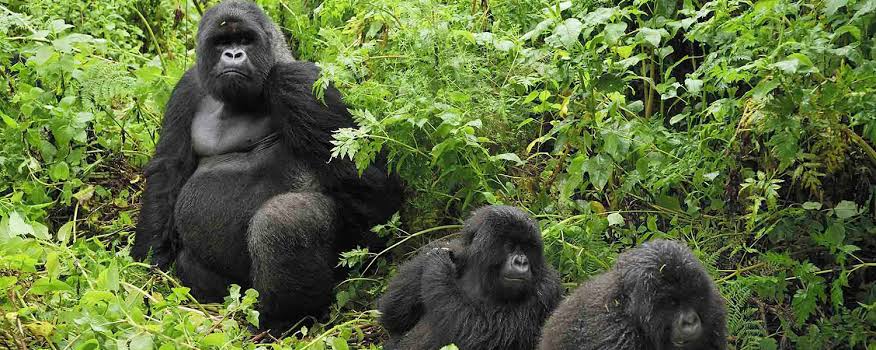
Most sources give the family as 11 members, including two silverbacks, with adult females and infants. That makes it a small family, compared with the 20 to 30 members of the park’s larger groups. A small family is less conspicuous in the forest and may move more easily, which could be part of the reason it is mobile.
As with other families, group sizes change through births, deaths and transfers. One source describes the number as 11 in more than one account, which suggests relatively stable numbers, but you should ask your guide for the current composition on the day and for the names of the silverbacks.
Where Does Ugyenda Live? A Conflict in the Sources
The sources give three answers. Several say that the family lives on the slopes of Mount Bisoke, the volcano with a crater lake at its summit, and that the trek is relatively not very difficult. One says that the group wanders around the Karisimbi slopes, which would place it on the high, demanding side of the park. Another says that its whereabouts, thought to be mostly around Bisoke, are mostly unknown, and that it is notorious for being the most difficult to track down.
The most sensible reading is that the family ranges widely across the Bisoke and Karisimbi slopes, and that the difficulty of the trek depends on where it is on the day. That fits with the name and with a family that never seems to settle. It also means that any promise of an easy walk, or of a hard one, should be treated as a guide.
How Trackers Find a Mobile Family
Every habituated family in Volcanoes National Park is followed by trackers who locate it at dawn, using knowledge of the previous day’s nesting site, feeding traces, dung, broken vegetation and movement patterns, and then radio the position to the guides. Each family is monitored daily by park rangers who report its exact location each morning before trekking begins.
For a mobile family such as Ugyenda, this daily work matters more. The trackers’ knowledge of where it slept and which way it has moved tells the guides how far you will walk. Rangers will make the final call on whether a trek is safe and feasible, and on rare occasions a family may be too far away to reach in a day. Be ready for the guides to adjust the plan.
Planning for Uncertainty
The practical message is simple. Prepare for the hard end, hope for the easy end and keep a flexible attitude. A trek that turns out shorter than expected is a bonus, and a trek that turns out longer is an adventure.
| Possible Scenario | What It Means | How to Prepare |
| Family found close to the trailhead | A short, easy walk of about an hour | Be ready to spend more of the day on other activities. |
| Family found on the mid-slopes | A moderate walk of two to three hours | Pack as for any standard trek, with a porter. |
| The family was found high on the slopes. | A long, demanding walk of four hours or more | Carry enough water and food, wear proper boots and be willing to go slowly. |
| Family too far to reach | The rangers may decide to switch the plan. | Have a backup, such as golden monkey tracking, and keep your schedule flexible. |
Physical Preparation: Prepare for the Long End
The dry seasons, June to September and December to February, are the most comfortable. In the rainy seasons, the slopes can be very muddy. Anyone with a health condition should speak to a doctor before booking a trek and tell the rangers at the briefing.
- Walk on hills and stairs with a loaded daypack for several weeks, building to two or three hours.
- Practice on wet, uneven ground in the boots you will wear.
- Wear waterproof, broken-in boots, gaiters, long trousers, long sleeves and gardening gloves.
- Bring a waterproof jacket, warm layers, a hat and sunscreen.
- Hire a porter at about US$20 to US$30 and use a walking stick.
- Carry at least two liters of water and energy snacks.
Mental Preparation: Flexibility Is Part of the Trek
A family that is always on the move is a good reminder that gorillas are wild animals and not exhibits. You may be asked to change direction, to wait while trackers confirm a position or to cover more ground than you hoped. That is normal and part of what makes the encounter special.
Try not to measure the experience by the length of the walk. A long trek can be a highlight, and a short one is not a lesser meeting. The hour with the gorillas is the same length, and it starts the moment you reach them. Keep an open mind, and let the guides do their work.
What the Hour With Ugyenda Is Like
Many visitors say that a mobile family can make the hour more dynamic. Keep your voice low, move slowly when asked and let the guides manage the group.
- A small family, with about eleven members, so you can follow individuals and watch relationships.
- Two silverbacks, which means that you may see the interplay between mature males.
- A group that is used to moving and may shift position during the hour, so be ready to follow the guide.
- Adult females and infants, whose behavior is often the most memorable part of the visit.
- The usual one hour, with a minimum distance of about 7 meters where possible and a strict ban on flash and food.
How Ugyenda Compares With Other Families
If you want predictability, ask for a family such as Muhoza or Amahoro. If you are happy with uncertainty, Ugyenda is an interesting family to be assigned to.
| Family | Size in Sources | Predictability | Trek |
| Ugyenda | About 11 | Low, always on the move | Variable: Bisoke or Karisimbi slopes |
| Hirwa | About 9 to 16 | Variable, with one source saying it wanders | Easy to moderate, or hard if it has moved |
| Agashya | About 13 to 27 | Moves uphill when threatened | Easy to medium |
| Amahoro | About 12 to 18 | High, described as predictable | Relatively strenuous |
| Muhoza | About 11 to 22 | High, central and short | Short and easy |
How Allocation Works: You Cannot Book Ugyenda
The Rwanda Development Board does not allow visitors to request specific families in advance. At about 7 am in Kinigi, rangers assign each group of up to eight to a family based on tracker reports, fitness and the permit allocation. You can ask for a short or long hike, and tell the rangers about your fitness, but the park decides.
The rangers base their decision on where the trackers found each family that morning and on the fitness of your group, so a family that has moved far is more likely to go to a group that is ready for a long walk. Tell your operator in advance, and be honest at the briefing. If you are assigned to Ugyenda, be ready for a variable day.
Who Ugyenda Suits
Ugyenda suits flexible, fit travellers who enjoy the unpredictability of wild animals; photographers who like a small family; repeat visitors who want something different; and anyone who is happy to adapt to the day. It is also a good choice for visitors who value the process as much as the destination.
It is less suitable for travellers who need a guaranteed short trek, for anyone with limited mobility who cannot cope with a possible long walk and for those who want the largest family. If that applies to you, tell the rangers early.
Costs and Planning
A gorilla permit costs US$1,500 per person per trek, set by the Rwanda Development Board, with roughly 10 percent of permit revenue reported to be shared with communities around the park. Our separate guides compare budget, mid-range, and luxury lodges near Volcanoes National Park. Book your permit early, keep a spare day for weather and plan a backup activity such as golden monkey tracking, at about US$100.
Frequently Asked Questions
What does Ugyenda mean?
On the move, or mobile, in Kinyarwanda, because the family does not settle in one place.
How big is the family?
About 11 members, including two silverbacks, in most sources.
Where does it live?
Sources say the slopes of Bisoke or Karisimbi, which fits a family that moves widely.
Is Ugyenda an easy trek?
It depends on where the family is on the day. Some sources call it not very difficult and others the hardest to find.
Can I book the Ugyenda family?
No. The Rwanda Development Board assigns families at the morning briefing.