Semliki National Park
Semliki National Park suits serious birders and travellers with a genuine interest in Central African rainforest ecology, more than it suits anyone looking for a classic game-viewing day: there are no game drives inside the park, since the terrain is dense forest rather than open savannah, and all activities are conducted on foot. Travellers uncomfortable with extended walking, or expecting the plains-game experience of a typical Uganda safari, should look instead to the neighbouring Toro-Semliki Wildlife Reserve or one of Uganda’s larger savannah parks.
For the right traveller, though, Semliki delivers something genuinely different from the rest of the country’s protected areas. Its position as the easternmost extension of the Ituri Forest means it holds species with a Central African rather than East African character, several found in no other Ugandan park, and a birding reputation strong enough that the park is sometimes described by specialist guides as one of the country’s most rewarding, if least visited, birding destinations.
We are candid that Semliki works best as an addition to a wider western Uganda itinerary rather than a destination in its own right. Paired with Semliki Valley Wildlife Reserve for game drives, or with a Kibale and Queen Elizabeth circuit for chimpanzee tracking and savannah game viewing, it rounds out a trip meaningfully; visited alone, its narrower focus on forest birding and the hot springs may feel limited to travellers without a specific interest in either.
Why Semliki Matters
The Only Lowland Tropical Rainforest in East Africa
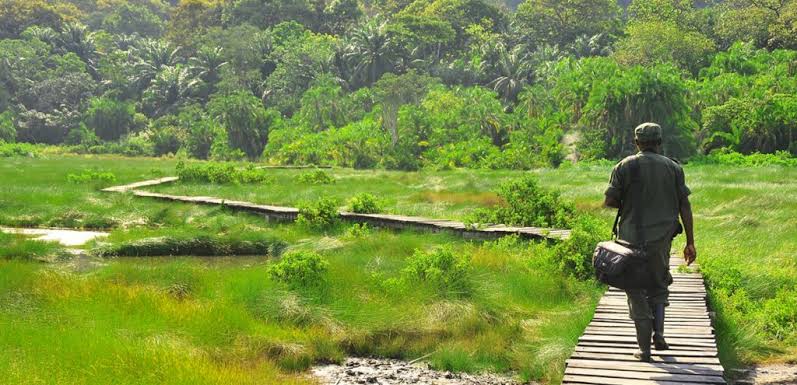
Semliki protects the easternmost reach of the Ituri Forest, which stretches over five hundred kilometres into the Democratic Republic of Congo, making this small, roughly 220 square kilometre park the only true tract of lowland tropical rainforest in East Africa. Ugandan ironwood trees dominate the canopy, interspersed with Borassus palm groves and dense fern understorey, a genuinely different forest character from Bwindi’s montane rainforest or Kibale’s mid-altitude forest further east.
A Bird List Unlike Anywhere Else in Uganda
Semliki’s recorded bird list runs to around 435 species, representing over forty percent of all species recorded in Uganda, and includes a striking concentration of Guinea-Congo biome species found nowhere else in the country. Serious birders travel specifically for species such as the Congo serpent eagle, the nkulengu rail, and a range of hornbills including the red-billed dwarf and black-casqued varieties, alongside the shoebill occasionally reported from nearby Lake Albert.
Sempaya’s Hot Springs
The park’s best-known single attraction is the pair of hot springs at Sempaya, reached via a short boardwalk through the forest from the park office. Nyansimbi, the female spring, is a genuine boiling geyser, spurting steaming water up to two metres into the air, while Bitende, the male spring, is a calmer, wide pool roughly twelve metres across reached after a longer forest walk. Local Bamba tradition holds that ancestral spirits inhabit both springs, and visitors can still cook eggs or plantain in the boiling water as local communities have long done.
Eleven Primate Species
Semliki’s forest supports eleven primate species, including chimpanzee, black-and-white colobus, grey-cheeked mangabey, and Uganda’s only population of De Brazza’s monkey, a striking, bearded Central African species not found in any other Ugandan park. Guided primate walks along the park’s forest trails offer a genuine chance at several of these species, though sightings require patience given the density of the forest.
Where Semliki Fits on a Uganda Itinerary
Semliki sits in Bundibugyo District, western Uganda, reached via Fort Portal, itself roughly five to six hours by road from Kampala. From Fort Portal, the Sempaya park office is a further hour to hour and a half on a good tarmac road, a considerable improvement on the rougher access this park once required. The neighbouring Toro-Semliki Wildlife Reserve lies about twenty kilometres away, a separate visit rather than an extension of the same park entry.
| From | Approx. Distance / Time | Notes |
| Kampala / Entebbe (road) | 6 – 7.5 hours total | Via Fort Portal; good tarmac for most of the route. |
| Fort Portal | 1 – 1.5 hours | The most common staging point for a Semliki visit. |
| Toro-Semliki Wildlife Reserve | About 20 km / 30 – 45 minutes | A separate protected area with different management; visited independently for game drives. |
| Kibale National Park | 2 – 3 hours | Combinable for travellers building a wider western Uganda rainforest circuit. |
When to Visit
| Season | Months | What to Expect |
| Drier Spells | June – July, December – February | Firmer forest trails, generally the more comfortable trekking windows. |
| Wetter Periods | August – November, March – May | Higher rainfall typical of lowland rainforest, though the park receives moderate rain even in its drier months and can be visited comfortably year-round. |
Semliki’s rainforest climate means rain is a possibility in any month, and we do not recommend restructuring travel dates purely around this park’s seasonality. Birding remains productive throughout the year, and the hot springs walk is unaffected by rainfall in any meaningful way.
Budget
Semliki is one of the more affordable parks on a Uganda itinerary. Park entry fees are modest, and as of recent seasons, the Uganda Wildlife Authority has waived the separate fee once charged for the Sempaya hot springs walk, folding it into standard park entry. Guided forest and birding walks carry small additional fees, typically arranged directly at the park office.
| Tier | Approx. Cost (per person/night, full board) | What You Get |
| Budget | US$40 – 90 | Uganda Wildlife Authority bandas and campsites near Sempaya, basic facilities suited to researchers and budget travellers. |
| Mid-Range | US$120 – 220 | A limited number of comfortable lodges near the park or in Bundibugyo and Fort Portal town. |
| Luxury | Limited availability | Higher-end options are scarce directly at Semliki; most travellers base a luxury stay in Fort Portal instead and visit as a day trip. |
Given the limited accommodation directly at Semliki, we frequently base clients in Fort Portal and treat the park as a full-day excursion rather than requiring an overnight stay directly at the park boundary, particularly for travellers not planning the longer Kirumia Trail.
Where to Stay
- Uganda Wildlife Authority bandas and campsites near the Sempaya park office, the main budget option directly at the park.
- A small number of guesthouses in Bundibugyo town, a short distance from the park, offering simple but adequate facilities.
- Comfortable mid-range and upper-range lodges in Fort Portal, roughly an hour to ninety minutes away, a practical base for travellers treating Semliki as a day excursion within a wider itinerary.
Activities Inside the Park
- The Sempaya nature trail, leading to both the Nyansimbi and Bitende hot springs, the park’s signature and most accessible activity.
- Guided birding along the six-kilometre public road between Sempaya and Ntandi, offering clear canopy views and consistent sightings.
- The Kirumia Trail, a fourteen-kilometre route into the forest interior reaching the Semliki River, best undertaken as an overnight camping trip for serious birders.
- The Red Monkey Trail, an eleven-kilometre route along the park’s eastern boundary, offering a chance at the rare De Brazza’s monkey.
- Night walks in search of nocturnal primates and forest sounds, a distinctive addition available through the park office.
- A Batwa cultural visit, offering insight into the community’s traditional forest life before the area’s protection as a national park.
Planning Advice
- Confirm which Semliki you are booking, the rainforest national park or the separate Toro-Semliki Wildlife Reserve, since the two offer entirely different experiences and are sometimes conflated in casual trip planning.
- Treat Semliki as a walking destination; there are no game drives inside the park, and all activities require reasonable comfort with extended time on foot.
- If birding is your main interest, budget at least a full day, and consider the overnight Kirumia Trail camping option for serious species-list building.
- Base your stay in Fort Portal if you are not planning the longer forest trails, and treat Semliki as a day excursion rather than requiring accommodation directly at the park.
- Combine Semliki with Kibale or the Toro-Semliki Wildlife Reserve to round out a western Uganda itinerary that includes both classic game viewing and this rainforest’s more specialised appeal.
Who Semliki Suits Best
| Traveller Type | Recommendation |
| Serious birder | Excellent, near-essential fit given the park’s list of 435 species, many found nowhere else in Uganda. |
| Traveller wanting classic game drives | Better served by the neighbouring Toro-Semliki Wildlife Reserve, a separate area entirely. |
| Primate enthusiast | Rewarding given eleven resident primate species, including Uganda’s only De Brazza’s monkey population. |
| Traveller with limited time in western Uganda | Should weigh Semliki against Kibale or Queen Elizabeth, both offering broader appeal within similar travel time. |
| Researcher or dedicated naturalist | Strong fit given the park’s genuinely distinct Central African forest ecology. |
| Family with young children | Better suited to shorter walks like the Sempaya trail rather than the longer Kirumia or Red Monkey trails. |
Frequently Asked Questions
Is Semliki National Park the same as Toro-Semliki Wildlife Reserve?
No, and this is the most common point of confusion. Semliki National Park is dense rainforest with no game drives, home to the Sempaya hot springs. Toro-Semliki Wildlife Reserve, a separate protected area roughly twenty kilometres away under different management, is open savannah offering classic game drives and a chance at shoebill on Lake Albert.
Can I do game drives at Semliki National Park?
No. The park’s dense forest terrain means all activities are conducted on foot. Travellers wanting vehicle-based game drives should visit the neighbouring Toro-Semliki Wildlife Reserve instead.
What are the Sempaya hot springs?
A pair of geothermal features, Nyansimbi, a boiling geyser that spurts steaming water into the air, and Bitende, a calmer, wide thermal pool reached via a longer forest walk. Both hold cultural significance to the local Bamba community and remain a popular and accessible highlight for most visitors.
How many days should I spend at Semliki?
A single day covers the Sempaya hot springs trail and some birding along the main road comfortably. Serious birders often extend to two days or add the overnight Kirumia Trail camping trip for a more complete species list.
Is Semliki worth visiting if I am not a birder?
It can be, particularly for travellers interested in rainforest ecology, primates, or the Sempaya hot springs themselves, but the park’s appeal is narrower than Uganda’s larger, more varied parks for travellers without a specific interest in forest birding or botany.
How do I get to Semliki?
Via Fort Portal, itself five to six hours by road from Kampala, followed by a further hour to ninety minutes to reach the Sempaya park office on generally good tarmac roads.