Rwenzori Mountains National Park
The Rwenzori mountains are not a single, stand-alone peak with a straightforward up-and-down summit trail; they are a genuine mountain range, with repeated ascents and descents between camps, a technical final push involving fixed ropes and crampons, and weather that changes faster than almost anywhere else we send clients trekking.
What makes that difficulty worth discussing, rather than downplaying, is what it protects. The Rwenzoris hold some of the last permanent glaciers on the African continent, on peaks rising directly from the equatorial rainforest floor, a combination found in only a handful of places on earth. That ice is retreating, measurably and quickly, which adds a genuine sense of urgency to a Rwenzori trek that a Kilimanjaro or Elgon climb simply does not carry in the same way.
Should You Trek the Rwenzoris?
The Rwenzoris suit experienced trekkers who want a genuine mountaineering challenge, not simply a long, high-altitude walk: reaching Margherita Peak, at 5,109 metres the highest point in Uganda and the third-highest in Africa, requires seven to nine days on the standard itinerary, a final day involving glacier travel with crampons and fixed ropes, and a level of physical preparation closer to technical mountaineering than to a standard hiking trip. Travellers without prior high-altitude or rope-assisted trekking experience should treat the summit push as a serious undertaking rather than an extension of a normal safari.
For travellers who want the range’s scenery and unique afro-alpine vegetation without the technical summit, shorter three to four day treks reach lower huts and viewpoints, typically up to around 3,100 to 4,300 metres, without requiring glacier travel or specialised equipment. We recommend this option often, and without any sense that it is a lesser experience; the Rwenzoris’ lower zones, dense montane forest giving way to giant heather and bizarre, oversized lobelias and groundsels, are remarkable on their own terms.
The honest trade-off against Uganda’s other major trek, Mount Elgon, is straightforward: the Rwenzoris offer glaciers, permanent snow, and a genuine mountaineering challenge that Elgon cannot match, at meaningfully higher cost and physical demand. Travellers who want dramatic altitude and ice should choose the Rwenzoris; those who want a rewarding but non-technical trek should choose Elgon instead.
Why the Rwenzoris Matter
Glaciers on the Equator, and Retreating Fast
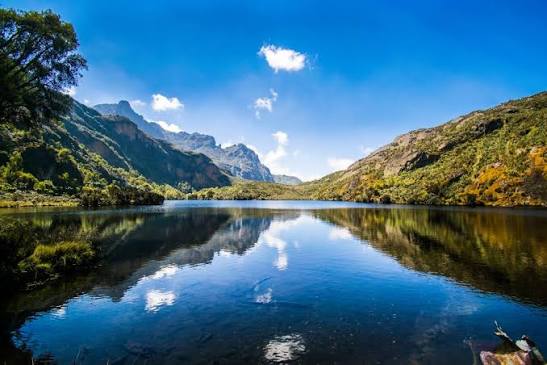
The Rwenzoris sit almost directly on the equator, yet Mount Stanley’s upper slopes carry permanent glaciers, a combination that once supported a far larger ice field than exists today. Rising global temperatures have driven substantial glacial retreat over the past several decades, and current summit routes now cross active crevasses that did not exist a generation ago. The Uganda Wildlife Authority has responded by installing a bridge and additional fixed ropes across the most hazardous sections, allowing summit hikes to continue safely, but the underlying trend is real and not something we downplay to clients: the ice here may not be a permanent feature much longer, which is part of why serious trekkers increasingly treat this as a summit to reach now rather than defer.
A UNESCO World Heritage Range With Genuine Vertical Variety
Unlike a single-cone volcano, the Rwenzoris form an actual mountain range with six major glaciated peaks, Mount Stanley, Speke, Baker, Emin, Gessi, and Luigi di Savoia, connected by valleys, passes, and a chain of glacial lakes. The trek passes through a genuinely striking sequence of vegetation zones, tropical forest, bamboo, giant heather draped in old man’s beard lichen, and finally afro-alpine moorland dotted with giant lobelias and groundsels found in only a few high-altitude pockets of East Africa.
Two Established Routes
The Central Circuit Trail, Uganda’s original and most established route, begins at Nyakalengija and runs roughly 58 kilometres over five to nine days, passing through the Bujuku Valley and the striking Kitandara Lakes before the final summit push via Elena Hut. The Kilembe Trail, starting near Kasese, offers an alternative approach with strong forest scenery and a slightly different vantage on the range’s lower zones, also used by some operators for multi-day non-technical treks that stop short of the summit.
Where the Rwenzoris Fit on a Uganda Itinerary
The Rwenzoris rise directly above Kasese town in southwestern Uganda, making them one of the more conveniently located trekking destinations relative to Uganda’s main safari circuit. Queen Elizabeth National Park sits just one to two hours away, allowing travellers to combine a Rwenzori trek with classic savannah game viewing on the same trip without a long additional transfer.
| From | Approx. Distance / Time | Notes |
| Kampala / Entebbe (road) | 6 – 7 hours to Kasese | Domestic flights to Kasese airstrip cut this to about an hour. |
| Queen Elizabeth National Park | 1 – 2 hours | A natural, efficient pairing for a combined trek-and-safari itinerary. |
| Bwindi Impenetrable National Park | 3 – 4 hours | Workable as a further extension for travellers combining trekking with gorilla trekking. |
When to Trek
| Season | Months | What to Expect |
| Drier Windows | December – February, June – August | The most favourable conditions for trekking and the recommended windows for a summit attempt. |
| Wetter Months | March – May, September – November | Considerably muddier trails and reduced visibility at altitude; non-summit lower treks remain workable but less comfortable. |
Even in the recommended drier windows, the Rwenzoris receive substantial rainfall year-round, well over three metres annually in parts of the range, so waterproof gear is essential regardless of when you go. We do not describe any month here as reliably dry in the way we might for a savannah park; this is a genuinely wet mountain range by nature.
Budgeting for a Rwenzori Trek
Costs here run higher than Mount Elgon and considerably higher than most savannah park stays, reflecting the specialized guiding, porter support, and technical equipment a summit attempt requires. A full summit expedition, generally seven to nine days, typically runs in the range of 1,500 to 2,000 US dollars per person, inclusive of guides, porters, park fees, meals, and mountain hut accommodation. Shorter, non-technical treks to lower viewpoints cost meaningfully less, often in the 600 to 1,000 US dollar range for three to four days.
| Tier | Approx. Cost | What You Get |
| Non-Summit Trek (3–4 days) | US$600 – 1,000 per person | Lower-zone trekking to around 3,100–4,300m, no technical equipment required, full guide and porter support. |
| Standard Summit Trek (7–9 days) | US$1,500 – 2,000 per person | Full Margherita Peak attempt, including crampons, ropes, technical guiding, and mountain hut accommodation. |
| Kasese Accommodation (per night, before/after trek) | US$50 – 250 | Range from simple guesthouses to comfortable mid-range lodges for pre- and post-trek nights. |
Given the specialised nature of a summit attempt, we strongly advise booking through an established, licensed Rwenzori operator rather than shopping purely on price; the technical sections of this trek are not a place to economise on guiding quality.
Where to Stay
In Kasese, Before and After the Trek
- A range of comfortable mid-range hotels in Kasese town, the standard base for organising permits, porters, and equipment before setting out.
- Simple budget guesthouses for trekkers keeping costs down outside the mountain itself.
On the Mountain
- A series of trekking huts along the Central Circuit Trail, Nyabitaba, John Matte, Bujuku, and Elena among them, offering basic but functional shelter, included as part of any organised trekking package.
Activities In and Around the Range
- The full Central Circuit Trail summit trek to Margherita Peak, the range’s signature multi-day expedition.
- Shorter, non-technical treks to lower huts and viewpoints for travellers wanting the scenery and vegetation zones without the summit push.
- The Kilembe Trail as an alternative approach route, offering different forest and valley scenery.
- Birding and primate spotting in the lower montane forest zones, including chimpanzee activity at lower elevations.
- Cultural interactions with the Bakonzo community, whose settlements lie at the mountain’s foothills and who provide much of the range’s guiding and porter workforce.
Planning Advice
- Be honest with yourself about fitness and prior altitude experience before booking a summit attempt; this is a technical mountaineering trek, not an extended hike.
- Budget seven to nine days for a genuine summit attempt, since compressed four to five day options exist but carry real added risk from insufficient acclimatisation.
- Book through an established, licensed operator with genuine Rwenzori experience rather than the lowest-cost option available.
- Pack full waterproof gear regardless of season; this range receives significant rainfall in every month of the year.
- If a technical summit is not the goal, choose a three to four day non-summit trek rather than feeling obligated to attempt Margherita Peak.
Who the Rwenzoris Suit Best
| Traveller Type | Recommendation |
| Experienced high-altitude trekker seeking a technical summit | Excellent fit for a full Margherita Peak attempt, with realistic preparation and a licensed operator. |
| Hiker wanting scenery without technical climbing | Well suited to a three to four day non-summit trek to the lower huts and viewpoints. |
| First-time trekker with no altitude experience | Should strongly consider the non-summit option, or build in additional acclimatisation time if attempting the full summit. |
| Traveller seeking Africa’s classic glacier trek | The Rwenzoris are the clearest answer in Uganda; Mount Elgon does not offer comparable glacier travel. |
| Budget-conscious trekker | Better served by the shorter non-summit trek or by Mount Elgon, both considerably less expensive than a full Rwenzori summit expedition. |
| Combined Uganda circuit traveller | Pairs efficiently with Queen Elizabeth National Park given the short one to two hour transfer. |
Frequently Asked Questions
Is the Rwenzori trek harder than Kilimanjaro?
Most experienced guides and trekkers consider it more difficult, owing to the range’s repeated ascents and descents between camps, wetter terrain, and the technical glacier crossing required on the final approach to Margherita Peak, which Kilimanjaro’s standard routes do not require.
Do I need mountaineering experience to summit Margherita Peak?
Prior high-altitude trekking experience is strongly recommended, and some technical guidance is provided on the mountain itself, including crampons, ropes, and harnesses for the glacier crossing. This is a considerably more technical undertaking than a standard trekking holiday.
Are the Rwenzori glaciers disappearing?
Yes. The range’s glaciers have retreated substantially over recent decades due to rising temperatures, and current summit routes cross terrain that has changed meaningfully within the careers of guides still working the mountain. This is a genuine and ongoing trend, not a marketing point.
Can I trek the Rwenzoris without attempting the summit?
Yes, and this is a common and worthwhile choice. Shorter three to four day treks reach lower huts and viewpoints around 3,100 to 4,300 metres, taking in much of the range’s forest and heather-zone scenery without requiring technical glacier travel.
How does the Rwenzori trek compare to Mount Elgon?
The Rwenzoris offer genuine glacier travel, greater altitude, and a considerably more technical, expensive undertaking. Mount Elgon offers a rewarding but non-technical trek at a fraction of the cost, without ice or rope work.
What is the best base for organising a Rwenzori trek?
Kasese town, at the foot of the range, is the standard base for arranging permits, porters, and equipment and is where most licensed trekking operators are headquartered.