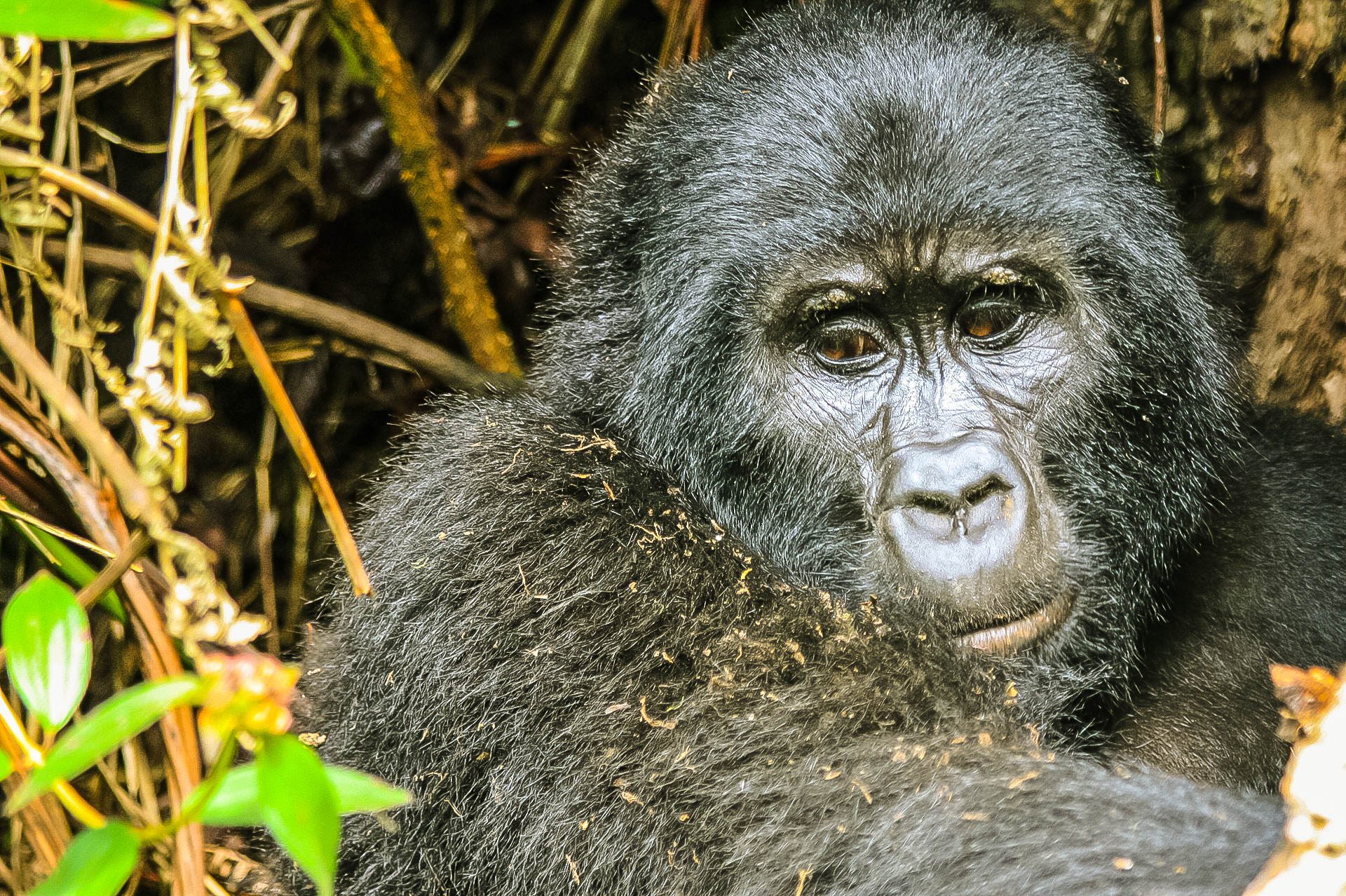
Destinations are grouped by what they primarily deliver, primates, savannah wildlife, mountains, and standalone attractions, since that grouping tends to match how people actually decide between them, more than geography alone does. A second, geographic view follows further down this page for travelers thinking in terms of routing and transfer time.
Primate Destinations
Destination | Best For | Distance from Kampala |
Bwindi Impenetrable National Park | The most reliable gorilla trekking in Uganda, across four sectors with genuinely different terrain. | 8 – 9 hours by road, or a short flight to Kihihi/Kisoro. |
Mgahinga Gorilla National Park | Golden monkey trekking, volcano hikes, and occasional gorilla trekking when the resident family is present. | 9 – 10 hours by road; best reached via Bwindi’s southern sectors. |
Kibale Forest National Park | Uganda’s highest chimpanzee tracking success rate, plus thirteen primate species overall. | 4 – 5 hours by road. |
For travellers whose main interest is primates, Bwindi and Kibale together form the backbone of nearly every itinerary we build; Mgahinga is a strong addition specifically for golden monkeys, but should not be booked expecting guaranteed gorilla trekking given its single family’s cross-border movement.
Savannah and Big Game Destinations
Destination | Best For | Distance from Kampala |
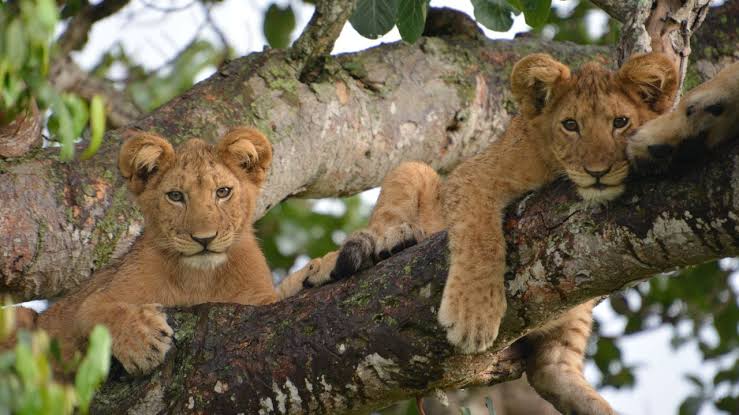
Queen Elizabeth National Park | The most complete single savannah park: channel cruise, tree-climbing lions, crater lakes, and forest gorge chimps. | 5 – 6 hours by road. |
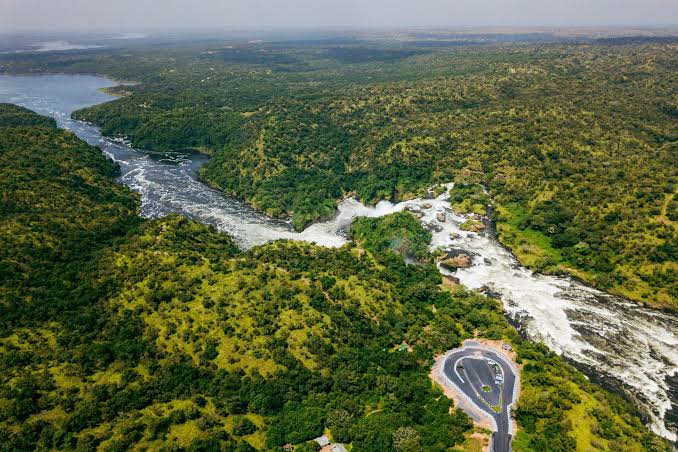
Murchison Falls National Park | Uganda’s largest park, the Nile’s dramatic falls, strong northern-bank game drives, and nearby chimp tracking. | 5 – 6 hours by road, or about 1 hour by air. |
Kidepo Valley National Park | Uganda’s most remote park, with cheetah, ostrich, and species found nowhere else in the country. | 9 – 10 hours by road, or about 2 hours by air. |
Lake Mburo National Park | The most accessible savannah park, and the only one offering walking safaris, night drives, and horseback safaris. | 3 – 4 hours by road. |
Queen Elizabeth and Murchison Falls are the two parks we recommend most often for savannah game viewing, given their central location and breadth of activities. Lake Mburo works best as a convenient stopover rather than a standalone destination, while Kidepo rewards travellers with the time or budget to reach Uganda’s most remote corner.
Mountain and Trekking Destinations
Destination | Best For | Distance from Kampala |
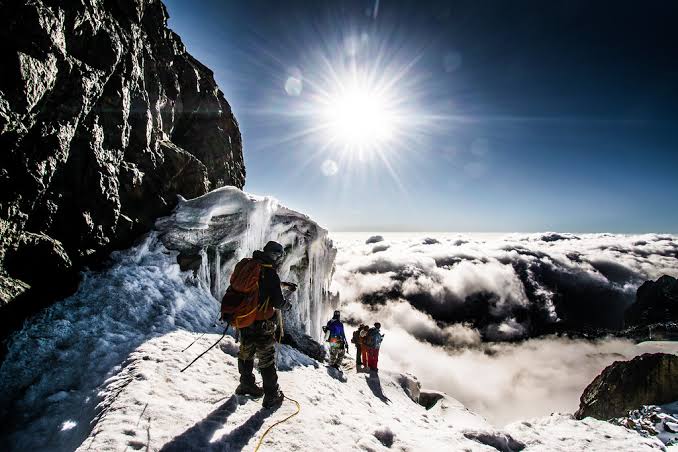
Rwenzori Mountains National Park | A technical, glaciated summit trek to Margherita Peak, Africa’s third-highest point. | 6 – 7 hours by road, or about 1 hour by air to Kasese. |
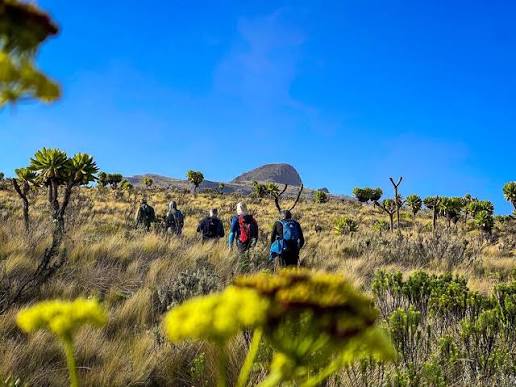
Mount Elgon National Park | A non-technical, accessible multi-day trek and the base for Sipi Falls. | 4 – 5 hours by road to Mbale. |
Choose the Rwenzoris for a genuine mountaineering challenge involving glacier travel; choose Mount Elgon for a rewarding but considerably less technical trek, at meaningfully lower cost.
Standalone and Specialist Destinations
Destination | Best For | Distance from Kampala |
Semliki National Park | Central African lowland rainforest birding, unique among Uganda’s parks, plus the Sempaya hot springs. | 6 – 7.5 hours by road via Fort Portal. |
Sipi Falls | A scenic, accessible waterfall stop at the base of Mount Elgon, popular as a weekend trip. | 4 – 5 hours by road to Mbale, then a further hour to Sipi. |
Kampala City | Cultural sites, markets, and a genuine introduction to Uganda before or after a safari. | Starting point for most itineraries. |
Uganda’s Destinations by Geographic Cluster
Beyond grouping by activity type, it helps to think of Uganda’s destinations as located in three loose geographic clusters, since transfer time within a cluster is generally short while transfer time between clusters can consume a significant part of a day.
- Southwest cluster: Bwindi, Mgahinga, Queen Elizabeth, Kibale, and Lake Mburo, all reachable from each other within two to five hours by road, forming the backbone of most itineraries.
- Northwest cluster: Murchison Falls and Semliki, both reachable from Kampala directly but requiring a separate transfer to reach the southwest cluster, best linked by a short domestic flight rather than a long road journey.
- Northeast and east clusters: Kidepo Valley, and separately Mount Elgon and Sipi Falls, both geographically isolated from the rest of the country’s parks and best treated as dedicated additions on longer trips rather than convenient stopovers.
Understanding these clusters helps explain why certain combinations, Bwindi with Queen Elizabeth, or Murchison with Kibale, appear so often in standard itineraries, while others, Kidepo with Mount Elgon, rarely do despite both being worthwhile destinations individually.
None of this means every cluster needs a place on your itinerary. A single southwest-cluster trip, Bwindi, Queen Elizabeth, and Kibale, delivers a complete, satisfying Uganda safari on its own. The northwest, northeast, and eastern clusters are genuine additions for travellers with more time or a specific interest in what they offer, not obligations that make an itinerary incomplete without them.
How to Choose
Rather than treating this as a menu to pick from freely, we find it more useful to think in terms of anchor and addition. Every Uganda itinerary needs an anchor, usually Bwindi for gorillas, and then a small number of additions chosen for genuine complementary value rather than simply because they exist.
- If your time is limited to seven or eight days, anchor on Bwindi and add Queen Elizabeth; this pairing alone covers gorillas, savannah game viewing, and a chimp-tracking option at Kyambura Gorge.
- If you have ten or more days, add Kibale for a stronger chimpanzee experience and consider Murchison Falls for the Nile and northern savannah.
- If primates are your central interest, add Mgahinga specifically for golden monkeys rather than gorillas, and treat any gorilla trekking there as a bonus.
- If you are a repeat visitor or have two weeks or more, Kidepo, the Rwenzoris, or Mount Elgon reward the additional time and logistics far more than they would on a compressed first trip.
- If you want a lower-key add-on with minimal extra planning, Lake Mburo, Sipi Falls, or a day in Kampala all fit naturally around a longer circuit without requiring dedicated logistics of their own.
Comparing the Two Major Savannah Parks
Because Queen Elizabeth and Murchison Falls are the two parks most often weighed against each other, a direct comparison is worth including here rather than leaving travellers to work it out from two separate guides.
Factor | Queen Elizabeth | Murchison Falls |
Signature feature | Kazinga Channel boat cruise and tree-climbing lions | The Nile forced through a narrow gorge, plus a longer boat cruise |
Predator density | Moderate, with reliable Ishasha tree-climbing lions | Present but lower on the northern bank |
Central location value | Links naturally to Bwindi and Kibale | More isolated; best combined via a short flight |
Best added activity | Chimp tracking in Kyambura Gorge | Chimp tracking in nearby Budongo Forest |
Many longer itineraries include both rather than choosing one over the other, since the two parks complement each other more than they compete.
Two Sample Itineraries
Reading a list of destinations rarely shows how they actually combine into a working trip, so it helps to see two concrete examples built from the anchor-and-addition approach above.
A Nine-Day Classic Circuit
- Day 1: Arrive Entebbe, transfer to Kampala for a night, optional city sightseeing.
- Days 2–3: Transfer to Bwindi via Lake Mburo overnight stop; gorilla trekking on day 3.
- Days 4–5: Transfer to Queen Elizabeth National Park; Kazinga Channel cruise and game drives.
- Days 6–7: Transfer to Kibale via the Fort Portal crater lakes; chimpanzee trekking.
- Days 8–9: Return to Entebbe via Kampala, with time for a city stop before departure.
A Fourteen-Day Extended Circuit
- Days 1–2: Arrive Entebbe, Kampala city day, transfer toward Murchison Falls.
- Days 3–4: Murchison Falls, boat cruise and northern bank game drives, Budongo chimp tracking.
- Days 5–6: Fly or drive to Kibale; chimpanzee trekking and Fort Portal crater lakes.
- Days 7–8: Transfer to Queen Elizabeth National Park; channel cruise, Ishasha tree-climbing lions.
- Days 9–11: Transfer to Bwindi; gorilla trekking with a buffer day for scheduling flexibility.
- Days 12–13: Optional Mgahinga extension for golden monkey trekking, or extra time at Bwindi.
- Day 14: Return to Entebbe via Kampala.
Both itineraries follow the same underlying logic: one clear anchor, gorilla trekking, and a small number of genuinely complementary additions rather than an attempt to cover every destination on this page in a single trip.
Is it better to visit fewer parks for longer, or more parks briefly?
Fewer parks for longer almost always produces a more satisfying trip. A single night at a savannah park barely allows one game drive, while two or three nights allows the wildlife, and the lodge itself, to actually register with a traveller. We generally advise clients to cut a destination from the list entirely rather than compress every stop into a single rushed night each.
Frequently Asked Questions
Do I need to visit every park to have a good Uganda safari?
No. Most satisfying Uganda itineraries include two to four destinations chosen deliberately, not the full list. Trying to cover too many parks in one trip usually means more time spent driving than experiencing any single place well.
Which park should I choose if I can only pick one savannah destination?
Queen Elizabeth, given its central location, breadth of activities, and easy pairing with both Bwindi and Kibale. Murchison Falls is a strong alternative if the Nile and its falls are a specific priority.
Is it worth visiting Kidepo, the Rwenzoris, or Mount Elgon on a first trip?
Generally, no, unless you have two weeks or more. These destinations reward the additional time and logistics required to reach them, but on a compressed first itinerary, Bwindi, Queen Elizabeth, and Kibale deliver more value per day spent.
How do I decide between Bwindi and Mgahinga for gorilla trekking?
Bwindi should be the default choice for anyone whose priority is a reliable gorilla trekking experience, since its multiple habituated families remain consistently within Ugandan territory. Mgahinga’s single family’s cross-border movement makes its gorilla availability considerably less predictable.
Can I combine Uganda’s destinations with Rwanda?
Yes. Uganda’s southwestern parks, particularly Mgahinga, sit close to the Rwandan border, and a combined circuit including Rwanda’s Volcanoes National Park is a common and workable extension for travellers with the time and interest.
What is the difference between a national park and a wildlife reserve in Uganda?
National parks, managed by the Uganda Wildlife Authority, carry the strictest protection status and host the country’s major tourism activities, gorilla and chimpanzee trekking among them. Wildlife reserves, such as Toro-Semliki, generally allow a wider range of land uses alongside conservation and tend to offer more traditional game-drive-style wildlife viewing rather than primate trekking.