Visit Rwanda in October
Visit Rwanda in October : October is the month when many travellers go looking for a discounted gorilla permit, and it is also the month when the answer is hardest to pin down. The short rains begin, crowds thin, lodges lower their rates and the idea that the Rwanda Development Board offers a reduced permit price for low-season travellers circulates widely.
Some operators say it does. At least one 2026 source says it does not. A traveller who builds a budget on the wrong assumption can be several hundred dollars out, so this guide is built around what is reported, what is confirmed and how to plan either way.
It lays out the permit discounts that appear in sources, with the conditions attached to each and the conflicts between them. It then provides a transparent budget breakdown, explains how October’s weather affects a trek, describes ways to save that do not depend on a discount, compares Rwanda’s permit with Uganda’s and offers a six-day budget itinerary. Prices come from 2026 operator and booking pages and are flagged where they conflict.
October at a Glance
Climate guides describe October as the start of the short rains, with brief bursts of showers that usually clear quickly. One calls it a short rainy season with bursts of sunshine appearing between short showers, with gorilla treks still possible and fewer travellers from October to December.
| Factor | October in Rwanda |
| Season | Start of the short rains, which run from October to November and sometimes into mid-December |
| Weather | Bursts of rain and sunshine, with greener landscapes and wetter trails than in the dry season |
| Crowds | Lower than the June to September peak |
| Gorilla permit | Standard price US$1,500, with discounts reported but not consistently confirmed |
| Lodges | Some lower rates as the season shifts |
| Best for | Budget-conscious, flexible travellers who verify prices before booking |
The Short Answer on Discounted Permits
The standard gorilla permit in Rwanda is US$1,500 per person per trek, set by the Rwanda Development Board, and it has been held at that level since 2017. That figure is confirmed by every source consulted. Whether it is reduced in the low season, and for whom, is where sources disagree, and the honest answer is that discounts are reported but not consistently confirmed.
The safe approach is to plan your budget at US$1,500 and treat any confirmed discount as a saving. Before you pay a deposit, get the permit price, the conditions and the dates in writing from the Rwanda Development Board or a licensed operator who can show the reference.
What the Reports Say, Side by Side
Notice the pattern. The combination discount is the best known and most plausible, since it would encourage visitors to spend time in Akagera or Nyungwe. But October is before the reported November start of the low-season window, so even if the discount exists, it may not apply to an early October stay. That is why verification matters.
| Reported Discount | Reported Price | Reported Conditions | Confidence |
| Standard permit | US$1,500 | For foreign non-residents, per person per trek, in every month according to one 2026 source | High: confirmed by all sources |
| Multi-park or combination discount | US$1,050, a saving of US$450 or 30 percent | Combine with Akagera or Nyungwe for at least three days and two nights, with some sources limiting it to November to May | Medium to low: reported in some sources, denied or not mentioned in others |
| Conference delegates | US$1,275 | Stay three or more nights as part of a qualifying meetings and conferences trip | Low to medium: reported in one 2026 source |
| African residents | US$500 | Promotional, with peak seasons from June to October often excluded | Low: reported in one source |
| East Africans and Rwandans | US$200 | Promotional, with peak seasons often excluded | Low: reported in one source |
| Occasional low-season reductions | Varies | Offered occasionally by the Rwanda Development Board according to one source | Low: no specific rate given |
How to Verify a Discount Before You Rely on It
If a discount is confirmed, it can be worth US$450 per person, which pays for a good part of an Akagera stay. If it is not confirmed, you have lost nothing by asking, and you will know your real budget.
- Ask the Rwanda Development Board or your licensed operator whether a discount applies to your exact dates.
- Ask what the conditions are, including minimum nights, parks required and any cut-off dates.
- Request the answer in writing, with the permit price and the reference to the policy.
- Check how the discount interacts with cancellations, since permits are often strict.
- If an operator advertises a lower price, ask what is excluded, such as the Akagera or Nyungwe stay.
- Compare at least two quotes, and be wary of any price far below US$1,050 for a permit.
A Transparent Budget Breakdown
The arithmetic shows why the permit dominates. Even at the lowest accommodation and transfer costs, a Rwanda gorilla trek costs close to US$2,000 per person on the ground. A confirmed discount would cut that by nearly a quarter, which is why it is worth asking and why it is not safe to assume.
| Component | Budget Scenario | Mid-Range Scenario |
| Gorilla permit at the standard price | US$1,500 | US$1,500 |
| Two nights near Volcanoes | About US$400 | About US$700 |
| Porter | About US$20 | About US$30 |
| Local transfers (bus and moto, or shared vehicle) | About US$20 | About US$100 or more for a private vehicle |
| Golden monkey tracking, optional | About US$100 | About US$100 |
| Illustrative total before flights, visas, insurance and tips | Roughly US$1,950 to US$2,050 | Roughly US$2,300 to US$2,450 |
| Total if a US$1,050 permit is confirmed | Roughly US$1,500 to US$1,600 | Roughly US$1,850 to US$2,000 |
Ways to Save That Do Not Depend on a Discount
One 2026 guide notes that a budget backpacker doing a full circuit by public minibus can spend about US$20 to US$35 on transport fares in a week, including motos for short trips. Fares and exchange rates change, but the order of magnitude is useful: transport can be cheap even when the permit is not.
- Travel in the low season, when lodges and guesthouses in Musanze and Kigali often cut their rates.
- Use public buses between Kigali, Musanze and Lake Kivu, at fares of a few dollars per leg, and moto-taxis for short hops.
- Stay in budget guesthouses or the Rwanda Development Board’s banda guesthouses inside Volcanoes National Park.
- Share transport and a driver with other travellers on private transfers.
- Add golden monkey tracking, at about US$100, and Kigali’s low-cost sights instead of several expensive hikes.
- Eat where local people eat, and carry a refillable water bottle and snacks.
- Skip a second paid permit, and spend the savings on one memorable trek.
Rwanda or Uganda? A Budget Comparison
If budget is your main constraint, Uganda’s permit is cheaper, but the total cost depends on transport and time. Rwanda’s short transfers can offset part of its higher permit price on a short trip. Our separate guides compare the two countries in more detail.
| Factor | Rwanda | Uganda |
| Gorilla permit, foreign non-resident | US$1,500 | US$800, or US$600 in the low season in 2026/2027 sources |
| Time with gorillas | 1 hour | 1 hour |
| Distances | Short, with Volcanoes about three hours from Kigali | Long, with Bwindi often eight to ten hours from Kampala |
| Lodging | Range from budget guesthouses to luxury lodges | Similar range, with lower prices at the budget end |
| Best for | Short, easy trips with a high-quality system | Lower permit cost and more variety on longer trips |
How October’s Weather Affects a Trek
October marks the start of the short rains, which are lighter and less predictable than the long rains of March to May. Trails in Volcanoes National Park are wetter than in the dry season, and gaiters, waterproof boots and a porter help. Cloud can obscure the volcano peaks, but gorilla sightings remain reliable, and many trekkers enjoy the greener forest and the smaller groups.
Rainfall records from 1981 to 2017 show that the September-to-December rainy season has become wetter, so October can be rainier than older guides suggest. Check forecasts a week before travel, and keep a spare day in the plan.
Wildlife and Activities in October
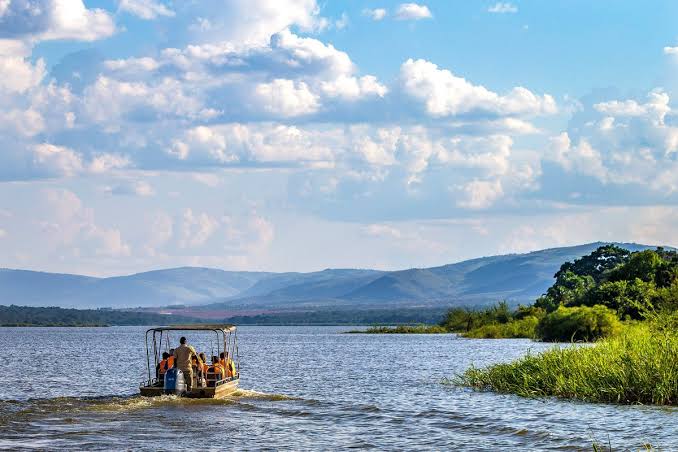
Akagera is green and quiet in October, with game drives and boat trips on Lake Ihema. Lions were reintroduced in 2015 and black rhinos in 2017, and the park is Rwanda’s only Big Five destination, with entry quoted at about US$50 per person per day in one source. Animals disperse as water becomes widely available, so sightings take more effort.
Nyungwe’s chimpanzee tracking, quoted at US$90 to US$150, and canopy walk, at about US$60, are atmospheric in misty weather. Migrant birds begin to arrive from about November, so October is a good month for birders to prepare. Kigali’s museums, memorials and restaurants offer rainy-day options.
A Six-Day Budget Itinerary for October
If you want to try for a combination discount, add two or three nights in Nyungwe or Akagera and ask your operator whether the extra nights meet the conditions. Do not extend the trip just to chase a discount you have not confirmed.
| Day | Plan | Cost Notes |
| 1 | Arrive in Kigali and visit the Genocide Memorial | Low-cost guesthouse and local meals |
| 2 | Bus to Musanze, with an afternoon walk | Bus fare of a few dollars |
| 3 | Gorilla trek with a porter | Permit at the confirmed price, porter at about US$20 to US$30 |
| 4 | Golden monkey tracking, then bus to Lake Kivu | About US$100 for the permit, bus fare of a few dollars |
| 5 | Lake Kivu swim, boat trip and brochettes | Low cost |
| 6 | Return to Kigali for departure | Bus fare and a spare buffer for weather |
Who October Suits, and Who Might Prefer Another Month
October suits flexible, budget-conscious travellers who verify prices, birders who want to see the first migrants, repeat visitors who want quieter trails and travellers who are comfortable with some rain. It is also a reasonable choice for those who want to combine Rwanda with Uganda’s lower-priced permits.
It is a weaker choice for travellers who want guaranteed dry trails, for those who need a certain discount to afford the trip and for anyone who dislikes mud. If dryness matters, choose June to September or December to February, and if price certainty matters, plan at US$1,500.
What to Pack for October
- A waterproof jacket and trousers, gaiters and quick-dry clothing.
- Waterproof hiking boots, gloves and a walking stick.
- Warm layers for cool mornings in the highlands.
- A dry bag, camera rain cover and silica packs.
- Sun protection for clear spells, and binoculars for migrant birds.
- A reusable bag, since single-use plastic bags are banned.
Getting There and Getting Around
Kigali International Airport is the main entry point, and a visa on arrival is available to all nationalities, with a single-entry tourist visa quoted at US$50 for 30 days. Kigali to Musanze is about two to three hours by bus from Nyabugogo station, at a fare quoted around US$3 to US$4, and moto-taxis cover the last leg to Kinigi. For comfort in the rain, consider a shared private transfer.
Frequently Asked Questions
Is the gorilla permit cheaper in October?
The standard price is US$1,500. Some sources report a US$1,050 combination rate in the low season, but others deny any seasonal discount, so confirm before booking.
What is the US$1,050 permit?
A reported discounted rate for visitors who combine gorillas with at least three days and two nights in Akagera or Nyungwe, with some sources limiting it to November to May.
Who gets the US$200 and US$500 rates?
One source says East Africans and Rwandans can pay US$200 and African residents US$500 under promotions that often exclude peak seasons.
How can I do Rwanda on a budget?
Use buses, guesthouses and golden monkey tracking, and accept that the permit remains the main cost.
Is Uganda cheaper?
Its permit is US$800, or US$600 in the low season, but distances are longer, so compare total costs.