Rwanda Safaris in August
Rwanda Safaris in August : August is the benchmark month for a Rwanda safari. It sits in the middle of the long dry season, when skies are at their clearest, trails are at their firmest, the volcano peaks are most often visible and wildlife in Akagera is concentrated around water.
Climate guides call June to September the overall best time to visit Rwanda, with dry weather, prime gorilla trekking in Volcanoes National Park and excellent safaris in Akagera. August is the heart of that window, and it is also the month when demand, permits and lodge rates are at their highest.
This guide explains what August really offers and what it asks of you. It covers the weather by region, the three wildlife experiences that shine in the dry season, the crowd and permit realities, what the high season does to costs, how to plan a seven-day itinerary, what to do if you cannot get the permit you want and who August suits. It flags where sources disagree, particularly on permit discounts, and identifies points that come from general knowledge.
August at a Glance
Climate guides describe the middle of the long dry season as bringing long dry spells with no rainfall for several days or weeks. It does not mean no rain at all, and sporadic showers still occur in the highlands, but they are usually short.
| Factor | August in Rwanda |
| Season | Middle of the long dry season, from June to September |
| Weather | Clear skies, sunshine and long dry spells, with cool mornings and occasional short showers in the highlands |
| Crowds | Among the highest of the year, with summer holidays in Europe and North America |
| Permits | Gorilla permit US$1,500, with promotional discounts often excluded in peak months |
| Wildlife | Firm trails for gorillas and chimps, and game concentrated at water in Akagera |
| Best for | Travellers who prioritise weather, views and wildlife viewing over price |
Why August Is Considered the Best Time for Trekking
The reasons are practical. Trails in Volcanoes National Park are drier and more manageable, views of the Virunga peaks are clearer and temperatures are comfortable for hiking. Gorillas can be easier to reach when the ground is firm, and the hike to the crater lake on Mount Bisoke and the Dian Fossey grave is far more pleasant in dry conditions.
Gorilla trekking runs year-round, and sightings are strong in every month, so August is not necessary for success. It is simply the most comfortable. If you have mobility concerns, a limited schedule or a strong wish for clear mountain photographs, August is the month to choose.
Weather in August, Region by Region
August mornings in the highlands are cold, and afternoons warm up quickly under a strong sun, so layers are the key. Dust can build on dry tracks in Akagera, so protect cameras and lenses.
| Region | What to Expect | Practical Note |
| Volcanoes and Musanze | Cool mornings, clear skies and sunny afternoons, with sporadic short showers | Carry a waterproof jacket and warm layers |
| Nyungwe | Cool and humid, with morning mist and rain possible | Firmer trails than in the rains |
| Kigali and Lake Kivu | Mild, sunny and pleasant | Light layers for evenings |
| Akagera | Warm and dry, with hot afternoons | Wildlife gathers around lakes and rivers |
Gorillas, Golden Monkeys and Volcano Hikes
A gorilla trek costs US$1,500 per person, including park entry, guides and one hour with a habituated family. Groups are limited to eight visitors per family, and permits for August are in high demand, so book as early as possible. After the trek, golden monkey tracking, at about US$100, is a gentle, playful second experience, and the Bisoke and Dian Fossey hikes, at about US$75 each, are at their best in dry weather.
The Karisimbi climb, Rwanda’s highest point at about 4,507 metres, is a two-day trek quoted at US$150 in one source and US$400 in another, and August’s stable weather makes it the safest month to attempt it. Whichever you choose, start early, carry layers and follow your guide’s instructions.
Akagera in August: The Big Five in the Dry Season
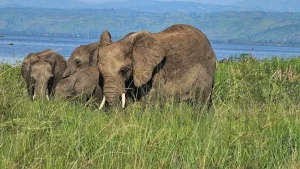
Akagera is at its best in August. As the dry season deepens, wildlife gathers around lakes and rivers, so sightings are more frequent. Lions were reintroduced in June 2015 with seven animals from South Africa, black rhinos in 2017 with twenty and more in 2019, and the park is Rwanda’s only Big Five destination. Elephants and buffalo are common, and lions and rhinos take patience.
Entry is quoted at about US$50 per person per day in one source, with vehicle fees separate, and game drives, boat trips on Lake Ihema and night drives are the main activities. August can be hot and dusty in the east, so start early, rest at midday and use the late afternoon for the best light.
Nyungwe in August: Chimps and the Canopy
Nyungwe is still cool and misty in August, but trails are firmer and the forest is more comfortable to walk. Chimpanzee tracking, with permits quoted at US$90 in one source and US$150 in another, starts early and can be steep. The canopy walk, quoted at about US$60, offers views over the forest, and the park’s 13 primate species in most counts and its birdlife make it a destination in its own right.
Nyungwe was inscribed on the UNESCO World Heritage List in 2023, and it is a long drive from Volcanoes, so plan two nights and break the journey at Lake Kivu.
Crowds and Permit Realities
August is one of the busiest months, and permits are the bottleneck. Each gorilla family can host only a limited number of visitors per day, and in peak months the total number of permits available is not enough for everyone who wants one. If you want a specific date, book as early as you can, and have alternative dates in mind.
Do not plan around discounts in August. The standard price is US$1,500, and reports of reductions refer mostly to the low season or to regional residents. If you cannot get a permit for your preferred date, ask your operator about neighbouring dates, and consider golden monkey tracking and volcano hikes, which are less constrained.
Costs: What the High Season Adds
The gorilla permit is the same price as in any month, but lodges are at their highest rates and least likely to offer deals. Luxury lodges near Volcanoes and Akagera can sell out well in advance, and transfers and domestic flights also fill up. Expect to pay more for the same room than in the green season, and book early to secure the property you want.
To manage costs, consider mid-range lodges, combine golden monkeys and Kigali’s low-cost sights with the permit, and travel by shared transport where appropriate. Ask for itemised quotes, and compare packages that include permits and lodging with the price of arranging each piece separately.
A Seven-Day August Itinerary
To add Nyungwe and the Congo Nile Trail, extend the trip by four to six days. If you cannot get an August permit, shift the gorilla trek to the first week of September, or add other activities in Volcanoes while you wait for availability.
| Day | Plan |
| 1 | Arrive in Kigali, visit the Genocide Memorial and rest |
| 2 | Drive to Akagera for an evening game drive |
| 3 | Full-day game drive and boat trip in Akagera |
| 4 | Drive to Musanze, with an afternoon village walk |
| 5 | Gorilla trek, with a rest afternoon |
| 6 | Golden monkey tracking or the Bisoke hike, then drive toward Lake Kivu |
| 7 | Return to Kigali, or continue to Nyungwe with an extension |
Events and Holidays Around August
August is a busy month for events. Umuganura, a national harvest festival, takes place on the first Friday of August, and Assumption Day on 15 August is a public holiday. In late August, preparations begin for Kwita Izina, the annual gorilla naming ceremony, which in 2026 included a community exhibition in Kinigi from 28 August to 8 September, with the main ceremony on 4 September.
These events add cultural depth to an August trip, but they can also increase demand for rooms in Musanze and Kigali. Ask your operator whether your dates overlap, and book early if you want to attend.
Who August Suits, and Who Might Prefer Another Month
August suits travellers who want the most reliable weather, first-time visitors who want clear views, families on summer holiday, photographers who love clean mountain light and anyone with limited mobility who values firm trails. It is also a strong choice for people who want to combine gorillas, chimps and the Big Five in a single trip.
It is a weaker choice for travellers on tight budgets, for those who dislike crowds or for anyone who cannot book months ahead. If cost or quiet matters more than weather, consider the green months or shoulder weeks at the start of June and the end of September.
What to Pack for August
- A waterproof jacket, since highland showers are possible even in the dry season.
- Layers and a warm fleece for cold mornings in the highlands.
- Waterproof hiking boots, long trousers, gloves and gaiters.
- A hat, sunglasses and high-factor sunscreen for strong sun at altitude.
- Neutral clothing for Akagera, and a dust cover for cameras.
- A reusable bag, since single-use plastic bags are banned.
Getting There and Getting Around
Kigali International Airport is the main entry point, and a visa on arrival is available to all nationalities, with a single-entry tourist visa quoted at US$50 for 30 days. Kigali to Musanze is about two to three hours by road, Akagera two to three hours and Nyungwe five or more. Private vehicles with driver-guides are standard for tours, and buses serve independent travellers. Book transfers and flights early for August.
Frequently Asked Questions
Is August a good time to visit Rwanda?
Yes. It is in the middle of the long dry season, with the best weather for trekking and game drives, though it is also the busiest and most expensive time.
Do I need to book gorilla permits far ahead for August?
Yes. Permits are in highest demand in peak months, so book as early as you can and have alternative dates.
Are there discounts in August?
Not usually. One source says peak seasons from June to October often exclude promotional rates.
Is Akagera good in August?
Yes. The dry season concentrates wildlife around lakes and rivers, so sightings are more frequent.
How many days do I need?
Seven days covers Akagera and a gorilla trek, and ten or more allows Nyungwe and Lake Kivu.