Hirwa Gorilla Family in Volcanoes National Park Rwanda
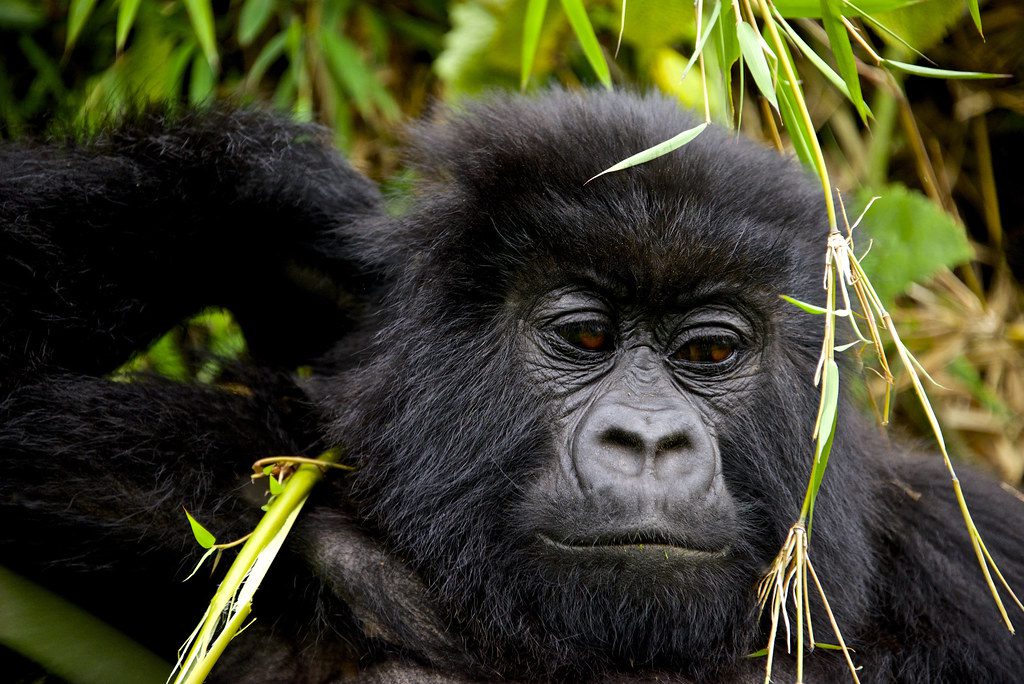
Hirwa Gorilla Family means “the lucky one,” and the name was chosen because of how the family formed. In 2006, members of two existing groups, Sabyinyo and Agashya, came together of their own accord to form a new family, and a silverback and several females chose to join him rather than being taken by force.
The group was habituated the same year, and it has been a favorite ever since, partly because of the story of its beginning and partly because of its twins, born in 2011. It is also a family that sources cannot agree on: some place it in the foothills of Sabyinyo, others say it wanders toward Karisimbi, and its size has been reported at anything from nine to sixteen.
This guide explains the Hirwa family and what to expect on a trek. It covers the origin of the name and the formation of the group, how new families like this come to exist, the twins, size and composition as sources describe them, the conflicts about where it lives and how hard it is to reach, what the hour is like, how it compares with neighboring families and how allocation works, since you cannot book it in advance.
Group details change, so figures are given as ranges and flagged where sources conflict.
Hirwa at a Glance
The disagreement about location is the main thing to understand about Hirwa. It is a family that may be found in different places at different times, which is one reason that a promised trek length should be treated as a guide.
| Fact | Detail |
| Name | Hirwa, meaning the lucky one |
| Formed and habituated | 2006 |
| Origin | Members of the Sabyinyo group and the Agashya group (Group 13), with one source also naming Susa |
| Reported size | About 9 to 16 members, with one or two silverbacks |
| Territory | The foothills of Sabyinyo and Gahinga in most sources, with one placing it around Karisimbi |
| Twins | Born in 2011, according to several sources |
| Trek | Easy to moderate in sources that place it near Sabyinyo, and difficult in the source that says it wanders |
A Group Formed by Choice
The family was formed in 2006 when some members of the Sabyinyo group and others from Group 13, the Agashya group, came together. Sources say it was named Hirwa, the lucky one, because its members joined peacefully and of their own free will.
A silverback and several females chose to leave their natal families and form a new one, and the habituation process was completed in the same year so that visitors could meet it.
The story matters because it is a contrast with the more dramatic splits elsewhere in the park. In several families, a silverback has taken females by force or left after a fight. In Hirwa, according to the sources, the group came together without conflict, which gives the family a gentler origin story and a name that has stuck.
What New Gorilla Families Form
Gorilla groups are not closed. Females routinely transfer between groups, young males leave their natal families and may live alone or with other males before attracting females, and groups sometimes divide when they grow large or when a leader dies.
These movements are called dispersal, and they prevent groups from becoming inbred.
A group such as Hirwa, formed from members of different families, is an example of how this works in practice. It also shows why group lists change so often. A family that is not on a list in one year may appear the next, and a family that is large one year may split in another.
The Twins
Several sources say that the Hirwa family is well known for its twins, born in 2011. Twin births are rare in gorillas, and one source notes that a mountain gorilla mother with twins usually abandons one of the infants, since caring for two in the forest is so demanding. Whether both twins survive is therefore a notable event, and it is one reason the family attracts attention.
Because the sources disagree about whether the 2011 twins belong to Hirwa or to Susa and about the survival claims, ask your guide who the twins are and how they are doing. Young gorillas grow quickly, and the twins born in 2011 would be juveniles or young adults by now.
Size and Composition: Reading the Numbers
Published sizes range widely: sources give 16 members, including one big silverback; 11 members, including two silverbacks; and nine members made up of three adult females, two subadult females, three babies and one silverback.
These descriptions probably reflect different years, and they show a small to medium family that has been through births and losses.
One source names the silverback as Munyinya and says that some members were taken by the newer Muhoza family, which several other sources confirm by saying that Muhoza’s silverback took two adult females from Hirwa.
The sensible way to read the numbers is as a guide to the mix. Hirwa is a small to medium group with one or two silverbacks, several females and a few infants and juveniles. Ask your guide on the day for the current composition.
Where Does Hirwa Live? A Conflict in the Sources
Most sources say the family stays in the foothills of Mount Sabyinyo and Mount Gahinga, the gentle slopes that it shares with its neighbors Sabyinyo and Agashya, which would make it one of the easier treks. One source gives a different picture, saying that the group wanders around the Karisimbi area, has no particular home and is therefore very difficult to track.
Both could be true at different times. Gorilla families change ranges with the seasons, the availability of food and the presence of rivals. What matters for a visitor is that trek length depends on where the trackers find the family on the day, and that the family’s reputation for easy access is a tendency, not a guarantee.
The Trek
If the family is in the foothills of Sabyinyo and Gahinga, the trek is typically at the shorter, gentler end of the range, with farmland, bamboo forest and moderate slopes, and it can take from about 30 minutes to two hours.
If the family has moved higher, the walk is longer, and sources that mention the Karisimbi area describe a harder day.
Prepare for a moderate trek, and be ready for more. The ground can be wet and slippery, the altitude is high and the weather changes quickly. A porter, waterproof boots and gaiters are recommended, and your honesty at the briefing will help the rangers decide which family suits your group.
What the Hour With Hirwa Is Like
Families formed by choice are not necessarily calmer than others, but the story of the group gives the hour a sense of occasion. Ask your guide how the family is doing and what has happened since its formation.
- A small to medium family, in which you can follow individuals and watch relationships.
- A silverback who leads a group that joined him by choice.
- Possible juveniles and young adults who include the 2011 twins, depending on the source.
- A more intimate atmosphere than the park’s largest families, with infants and juveniles in the foreground.
- The usual one hour, with a minimum distance of about 7 meters where possible and a strict ban on flash and food.
How Hirwa Compares With Its Neighbors
If you are assigned to Hirwa and it is near Sabyinyo, you will be in the same area as two of the park’s best-known and easiest families. If it has moved up, expect a longer walk.
| Family | Relationship to Hirwa | What Sources Say |
| Sabyinyo | A founding group of Hirwa, sharing the foothills | About 12 to 18 members, easy to trek |
| Agashya (Group 13) | A founding group of Hirwa | About 13 to 27 members, easy to medium |
| Susa | Named in one source as another founding group | Large and demanding, with twins of its own in some sources |
| Muhoza | A newer family in the lower park, which took two adult females from Hirwa | Short and relaxed, formed in 2016 |
How Allocation Works: You Cannot Book Hirwa
The Rwanda Development Board does not allow visitors to request specific families in advance. At about 7 am in Kinigi, rangers assign each group of up to eight to a family based on tracker reports, fitness and the permit allocation. You can ask for a short or long hike and communicate your fitness and needs, but the park decides.
Tell your operator in advance and be honest at the briefing. If you are assigned to Hirwa, enjoy the story of a family that formed by choice. If you are assigned elsewhere, remember that every family has a story, and your guide will tell it.
Who Hirwa Suits
Hirwa suits trekkers who want a small to medium family with a good story, couples and families with teenagers of at least 15, photographers who enjoy following individuals and visitors with moderate fitness. It is also a good choice for travelers who like unusual origin stories and want to hear how families form.
It is less suitable for anyone who needs a guaranteed short trek, since the family may be higher up, and for those who want the largest group and the most infants. If that is you, say so at the briefing.
Preparing for the Trek
The dry seasons, June to September and December to February, are the most comfortable. Rain is possible in every month in the highlands.
- Walk on hills with a loaded daypack for a few weeks, and break in waterproof boots.
- Pack gaiters, gardening gloves, long trousers, long sleeves and a waterproof jacket.
- Bring warm layers, a hat and sunscreen.
- Hire a porter at about US$20 to US$30, even for an easier trek.
- Carry water, snacks and a camera with a rain cover, and do not use flash.
- Stay in Kinigi or Musanze, and arrange your early transfer the evening before.
Costs and Planning
A gorilla permit costs US$1,500 per person per trek, set by the Rwanda Development Board, with roughly 10 percent of permit revenue reported to be shared with communities around the park. Our separate guides compare budget, mid-range, and luxury lodges near Volcanoes National Park. Book your permit early, and keep a spare day for weather.
Frequently Asked Questions
What does Hirwa mean?
The lucky one, because the group formed from members who joined of their own free will.
When was the Hirwa family formed?
In 2006, from members of the Sabyinyo group and the Agashya group.
How big is the family?
About 9 to 16 members, with one or two silverbacks, depending on the source.
Is Hirwa an easy trek?
Sources that place it in the Sabyinyo foothills describe it as easy to moderate, and one source says it wanders and is hard to track.
Can I book the Hirwa family?
No. The Rwanda Development Board assigns families at the morning briefing.