Bwenge Gorilla Family in Volcanoes National Park Rwanda
Bwenge Gorilla Family means “wisdom,” and the family that carries the name was built by a young silverback who left the group he was born in and gathered females from other families around him. The group was formed in 2007 and has been through hard years, including the loss of several infants, but it has recovered with new births and a capable leader.
It lives on the slopes of Karisoke, the saddle between Mount Bisoke and Mount Karisimbi, in terrain that sources describe as steep and muddy, and the walk to reach it is among the tougher ones in the park.
This guide explains the Bwenge family and what to expect on a trek. It covers the origin of the name and how the group formed, what the sources say about its size, its difficult years and its recovery, a conflict between claims about its age and its connection to Dian Fossey’s story, the location and the effort of reaching it, what the hour is like, how it compares with neighboring families and how allocation works, since you cannot book it in advance. Group details change, so figures are given as ranges and flagged where sources conflict.
Bwenge at a Glance
The size difference between sources probably reflects different years. A group of seven and a group of eleven may both be accurate descriptions of the same family at different times, after losses and births.
| Fact | Detail |
| Name | Bwenge, meaning wisdom, after the group’s dominant silverback |
| Formed | 2007, when the silverback Bwenge left his natal group and was joined by females from other groups |
| Reported size | About seven to 11 members, with one silverback |
| Territory | The slopes of Karisoke, in the corridor between Bisoke and Karisimbi |
| Trek | Steep and sometimes muddy, with about three hours and 600 meters of climbing in one account |
| History | Lost six infants in a difficult period, then recovered with new births, according to several sources |
| Style | A small, quieter family, with a smaller group than the park’s largest |
The Meaning of the Name and How the Group Began
The word Bwenge, derived from a local word meaning wisdom, names both the silverback and the family. Sources say the group was formed in 2007 when Bwenge, then the dominant male, left his birth group and was gradually joined by females from other groups. The habituation of the family was completed in the same year, so that visitors could begin to watch it.
This pattern, in which a young male leaves, builds a group from scratch and eventually makes it a family, is one of the main ways that new groups form in the Virunga forests. Bwenge’s group began small, and it has stayed small, which gives it a different atmosphere from the park’s large families.
A Difficult Chapter: Losing Infants, and Recovery
Several sources say the group went through a dark time in which six of its infants died. One of them says the family has since recovered, with two successful births recorded in recent years, and another says trackers noted two babies in the group. A third source says the family was down to seven members, which would reflect the losses.
The details of the deaths are not given in the sources used for this guide, so this guide does not speculate on the causes. What the sources agree on is that the family has been rebuilding. Infant mortality is a real challenge for small gorilla groups, and the arrival of new babies is a sign of recovery. If you meet the family, ask your guide how many infants it has now, and enjoy the sight of a small family doing well.
Small Groups:
Small families are more exposed to change than large ones. The loss of a few individuals changes the balance, and a single death can leave a silverback with few females and no obvious successor. At the same time, small groups can grow quickly when females join or babies are born, and their leaders are often highly attentive.
For visitors, a small family can be an advantage. There are fewer animals to watch, which makes it easier to follow individuals, and the group can feel more intimate. The trade-off is that a small family can be harder to find on difficult terrain, which is one reason treks to the Karisoke slopes can be long.
A Conflict Over History: Is Bwenge an Old Family?
Two kinds of claim appear about the Bwenge family that do not fit comfortably together. Most sources say the group was formed in 2007. But two sources go further. One says the group featured in the film Gorillas in the Mist, and others call it one of the oldest known families, featured in a 1988 documentary about Dian Fossey. A group formed in 2007 could not have appeared in a 1988 film, so either the claims refer to individuals who later joined the group, or they confuse Bwenge with another family.
The safest reading is that the Bwenge group as a family unit dates from 2007 and that some of its members or ancestors may have been connected to groups studied in the Fossey era. If this history matters to you, ask your guide at the briefing, and do not rely on operator pages for the detail.
Territory and the Trek
The Bwenge family lives on the slopes of Karisoke, the saddle between Mount Bisoke and Mount Karisimbi, where Dian Fossey founded her research camp in 1967. Sources describe the area as steep and sometimes muddy, and one account says the family lives on a steep hilltop. Another puts the effort at about three hours of hiking and about 600 metres of climbing.
Treat Bwenge as a demanding trek. The terrain is the main challenge, with mud, thick vegetation and altitude, and the walk can be long if the family has moved. A porter, a walking stick, waterproof boots and gaiters are recommended, and honest information about your fitness at the briefing helps the rangers match you to the right family.
What the Hour With Bwenge Is Like
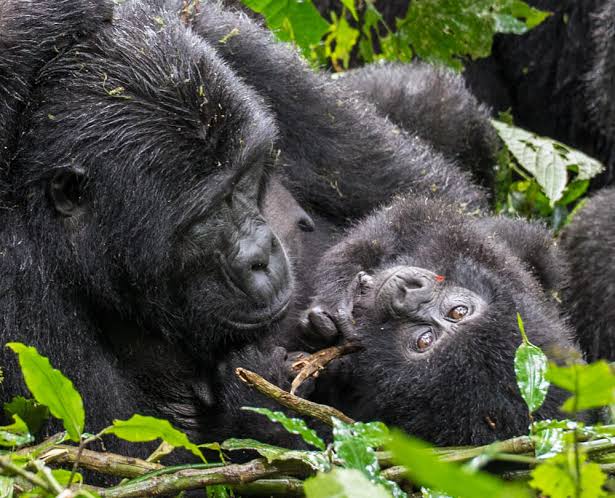
Watching a family that has recovered from loss gives the hour a particular feeling. Many visitors find the small groups more personal, and a guide who knows the family’s history can make it more moving.
- A small family, with about seven to eleven members, in which you can follow individuals.
- A single silverback who leads the group and who has rebuilt it after hard years.
- Possible infants, with sources mentioning recent births, which are often the center of attention.
- A quieter, more intimate atmosphere than the park’s large families.
- The usual one hour, with a minimum distance of about 7 meters where possible and a strict ban on flash and food.
Near the Fossey Grave: A Landscape of History
The Karisoke slopes are close to the site of Dian Fossey’s original camp and to her grave in the gorilla cemetery she built behind her cabin. A guided hike to the grave, quoted at about US$75, passes through this area, and visitors who trek Bwenge may be walking through the same landscape. Our separate guides to Dian Fossey’s legacy and to Karisoke Research Center explain the history.
If you are assigned to Bwenge, consider whether you want to add the grave hike on another day. It is demanding, and it gives a strong sense of the place where the research began.
How Bwenge Compares With Other Families
The comparison shows that Bwenge is among the smaller and more demanding families. If you want a gentle, short trek, ask for one, and if you are fit and curious about a family with a story, Bwenge is a good one to get.
| Family | Size in Sources | Trek | Character |
| Bwenge | About 7 to 11 | Steep, muddy, about three hours in one account | Small, recovering, intimate |
| Agashya | About 13 to 27 | Easy to medium | Large, lively, with a cautious leader |
| Amahoro | About 12 to 18 | Relatively strenuous, on Bisoke | Peaceful, with juveniles |
| Susa A | About 21 to 33 | Long, high slopes of Karisimbi | Fossey’s group, with twins |
| Muhoza | Started with 7 in 2016 | Short, in the lower park | Newest family, relaxed |
How Allocation Works: You Cannot Book Bwenge
The Rwanda Development Board does not allow visitors to request specific families in advance. At about 7 am in Kinigi, rangers assign each group of up to eight to a family based on tracker reports, fitness and the permit allocation across all the families. Because Bwenge involves a steep, muddy walk, you are more likely to be assigned to it if you tell the rangers that you are fit and ready for a longer hike.
Tell your operator in advance, and be honest at the briefing. If you are assigned to Bwenge, expect a long walk and a quiet hour. If you are not, remember that the hour with the gorillas is the same wherever you meet them.
Who Bwenge Suits
Bwenge suits fit adventurous trekkers who do not mind mud and slopes, visitors who prefer a small, quiet family, photographers who want to follow individuals and travellers with an interest in the history of the Karisoke area. It is also a good choice for those who enjoy the story of a silverback who built a family.
It is less suitable for travellers with limited mobility, for anyone who needs a guaranteed short trek and for those who want the largest family and the most infants. If that is you, tell the rangers, and expect a family such as Agashya or Muhoza instead.
Preparing for the Trek
The dry seasons, June to September and December to February, are the most comfortable. In the rainy seasons, the Karisoke slopes can be very muddy, so allow extra time and energy.
- Walk on hills and stairs with a loaded daypack for several weeks, and practice on wet, uneven ground.
- Wear waterproof, broken-in boots, gaiters, long trousers, long sleeves and gardening gloves.
- Bring a waterproof jacket, warm layers, a hat and sunscreen.
- Hire a porter at about US$20 to US$30, and use a walking stick.
- Carry water, snacks and a camera with a rain cover, and do not use flash.
- Stay in Kinigi or Musanze, and arrange your early transfer the evening before.
Costs and Planning
A gorilla permit costs US$1,500 per person per trek, set by the Rwanda Development Board, with roughly 10 percent of permit revenue reported to be shared with communities around the park. Our separate guides compare budget, mid-range, and luxury lodges near Volcanoes National Park. Book your permit early, and keep a spare day for weather.
Frequently Asked Questions
What does Bwenge mean?
Wisdom, in Kinyarwanda, after the group’s dominant silverback.
When was the Bwenge family formed?
In 2007, when the silverback left his natal group and was joined by females from other groups.
How big is the family?
About seven to eleven members with one silverback, depending on the source.
Is Bwenge a hard trek?
Sources describe a steep, muddy climb, with about three hours and 600 metres of ascent in one account.
Can I book the Bwenge family?
No. The Rwanda Development Board assigns families at the morning briefing.