Amahoro Gorilla Family in Volcanoes National Park
Amahoro Gorilla Family means peace in Kinyarwanda, and the name suits the family. Guides and operators consistently describe it as the most peaceful group in Volcanoes National Park, a family that has lived up to its name since habituation and that is led by a gentle silverback called Ubumwe.
The calm has had a price. A younger silverback named Charles spent months challenging Ubumwe, and when Ubumwe would not fight back as fiercely as Charles hoped, Charles took some of the females and left, founding a separate family called Umubano. The two groups still live close to each other, and the story of their split is one of the best-known in the park.
This guide explains the Amahoro family and what to expect on a trek. It covers the history and the split, the group’s size and composition as sources describe it, the reputation for calm, the territory on the slopes of Bisoke and the effort it takes to reach, what the hour is like, how this family compares with its neighbors, and how allocation works, since you cannot book it in advance. Group details change often, so figures are given as ranges and flagged where sources conflict.
Amahoro at a Glance
The disagreement over location matters less than it seems. The families on the Bisoke side range across a broad area of the mountain, and the trackers’ reports on the morning of your trek will tell the guides where the family is.
| Fact | Detail |
| Name | Amahoro, meaning peace or serenity in Kinyarwanda |
| Leader | The silverback Ubumwe, described as congenial and calm, |
| Reported size | About 12 to 18 members |
| Territory | Mostly the slopes of Mount Bisoke, with one source naming Karisimbi |
| Trek | Described as relatively strenuous, with a steep climb in several sources |
| Notable history | Lost members to the breakaway silverback Charles, who formed the Umubano group |
| Reputation | The most peaceful and predictable group in the park, with many juveniles |
A Family Named for Peace
The Amahoro group is described as considered the most peaceful group in Volcanoes National Park, named for the Kinyarwanda word for peace or serenity and led by a silverback named Ubumwe, who is known for his congenial nature. One source says the group has lived up to its name as one of the calmest families in the park since habituation, and another notes that visitors consistently say the climb to reach it is worth the effort.
Behavior like this matters to visitors. A calm silverback means a family that is generally relaxed in the presence of people, with juveniles playing close by and a leader who is not constantly on edge. Visitors often single out Amahoro for its juveniles, its predictability and its calm, which makes the hour easier to enjoy and to photograph.
How Charles Founded Umubano
The most famous chapter in Amahoro’s history is the departure of Charles. Charles had grown into a silverback of the same rank as Ubumwe, and trackers describe how he refused to take orders from the leader and challenged him constantly for months.
Ubumwe’s peaceful nature meant that he did not respond as an aggressive silverback might, and eventually Charles took some of the females and formed his own family, called Umubano, a word that means living together or neighborliness.
Sources say Charles left with about 13 members, and they describe him as having since commanded respect from Ubumwe. The two families live in the same general area, on the slopes of Bisoke, and visitors who trek one may hear about the other. It is an unusual case of a family that lost members through its own calm and a good story to hear from a guide on the way up.
What the Split Tells Us About Gorilla Leadership
In gorilla society, a silverback’s authority depends on more than strength. He must keep the females and the young safe, mediate quarrels and respond to challenges, and a leader who is gentle may keep his family calm but may also be vulnerable to a rival who wants more. Females can choose to stay or go, and a silverback who attracts them can build a group, while one who loses them watches his family shrink.
The Amahoro and Umubano story shows both sides. The peaceful family lost members, but it did not collapse, and the breakaway family established itself and has lived beside its parent group for years. For a visitor, it is a reminder that these are not troops following orders but families with relationships, rivalries and choices.
Size and Composition
Published sizes for the family vary from about 12 to 18. An older breakdown gives 17 members, including one silverback, five adult females, two blackbacks, two subadult males, two juveniles and five babies, while other pages give two silverbacks and 18 members, and one gives 12 members with three sil
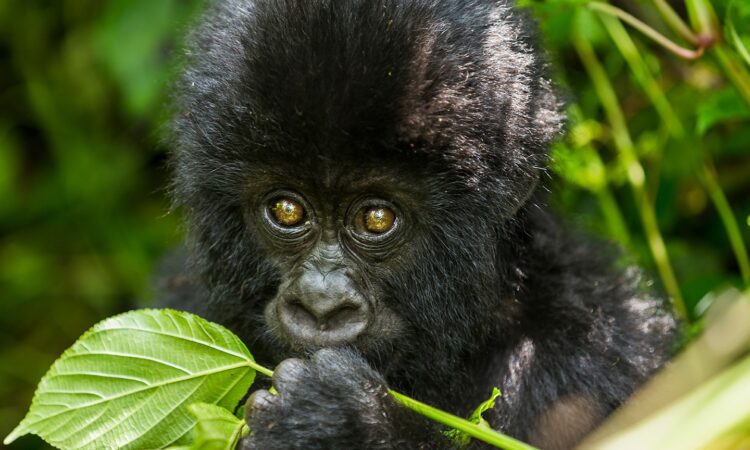
verbacks, three blackbacks, two females, three juveniles and one baby, although that description appears to be duplicated from the Umubano family on the same page.
The sensible way to read these numbers is as a guide to the mix, not a head count. The family is described as having several infants and juveniles in most accounts, which is what makes it appealing, and the number of silverbacks and blackbacks in the group varies from year to year as young males mature. Ask your guide on the day for the current composition.
The Trek: Steep Slopes of Bisoke
Most sources place the Amahoro family on the slopes of Mount Bisoke, one of the Virunga volcanoes with a crater lake at its summit. Several describe the trek as relatively strenuous, with a steep slope to climb to reach the group. One adds that climbing the steep slope is difficult but that visitors love the group for its juveniles, predictability and calm.
Plan for a moderate to demanding hike. Trek lengths for the Bisoke families vary with the group’s location, and sources give from about one to three hours or more. The ground can be muddy and slippery, particularly in the rainy seasons, and the altitude and the slope can be tiring.
A porter, waterproof boots and gaiters make a real difference, and an honest word about your fitness at the briefing helps the rangers match you to a family.
What the Hour With Amahoro Is Like
Many visitors say that the best moments come when they stop trying to photograph everything and simply watch. A calm family encourages that, and it is one of Amahoro’s pleasures.
- A relaxed silverback, which tends to make for a calm atmosphere around the family.
- Several juveniles and infants, who are often the center of the action.
- A family that is described as predictable, which helps photographers and anyone who wants to watch quietly.
- A sense of a family that has been through change, with neighbors close by on the same mountain.
- The usual one hour, with a minimum distance of about 7 meters where possible and a strict ban on flash and food.
Amahoro and Its Neighbours
If you are planning two treks, ask your operator whether you can be assigned to different families, and expect the Bisoke slopes to be a common pattern for the long end of the range.
| Family | Relationship to Amahoro | What Sources Say |
| Umubano | Split from Amahoro under Charles; lives nearby | About 9 to 13 members, led by Charles, with respect between the two leaders |
| Bwenge | On the slopes of Karisoke, between Bisoke and Karisimbi | A small family with a steep, muddy trek |
| Ugyenda | Reported on the slopes of Bisoke by some sources | A mobile family that is hard to predict |
| Agashya and Sabyinyo | On the foothills of Sabyinyo, on another side of the park | Easier, shorter treks |
How Allocation Works:
The Rwanda Development Board does not allow visitors to request specific families in advance. At about 7 am in Kinigi, rangers assign each group of up to eight to a family based on tracker reports, fitness and the permit allocation. Because Amahoro is described as a relatively strenuous trek, you are more likely to be assigned to it if you tell the rangers you are fit and ready for a longer hike.
Pass your preferences to your operator in advance, and tell the rangers honestly at the briefing. If you are assigned to Amahoro, expect a steady climb and a calm family. If you are assigned elsewhere, remember that the hour is the same.
Combining Amahoro With Bisoke and the Fossey Grave
The Bisoke side of the park offers other activities. The hike to the crater lake on Mount Bisoke is quoted at about US$75, and the hike to the grave of Dian Fossey, near the site of the original Karisoke camp, is also about US$75.
If you are fit, a trek with a Bisoke-side family and a second-day hike to the crater lake gives you two views of the same mountain. Our separate guides to the Fossey grave and to Karisoke Research Center describe the history.
Plan rest between demanding days, and avoid scheduling two long hikes back-to-back. Golden monkey tracking, at about US$100, is a gentler second activity.
Who Amahoro Suits
Amahoro suits fit travelers who want a calm, predictable family and are happy to climb for it, photographers who like a relaxed group with juveniles and anyone who enjoys a good story. It is also a good choice for visitors who want to hear about family dynamics and leadership from a guide.
It is less suitable for travellers with limited mobility or health concerns, for those who need a guaranteed short trek and for anyone who is nervous about steep muddy slopes. If you are in that group, tell your operator and the rangers in advance.
Preparing for the Trek
The dry seasons, June to September and December to February, are the most comfortable. In the rainy seasons, expect deeper mud on the Bisoke slopes.
- Walk on hills and stairs with a loaded daypack for a few weeks.
- Wear waterproof, broken-in boots, gaiters, long trousers, long sleeves and gardening gloves.
- Bring a waterproof jacket, warm layers, a hat and sunscreen.
- Hire a porter at about US$20 to US$30 to help with the slope and your bag.
- Carry water, snacks and a camera with a rain cover, and do not use flash.
- Stay in Kinigi or Musanze, and arrange your early transfer the evening before.
Costs and Planning
A gorilla permit costs US$1,500 per person per trek, set by the Rwanda Development Board, with roughly 10 percent of permit revenue reported to be shared with communities around the park. Our separate guides compare budget, mid-range and luxury lodges near Volcanoes National Park. Book your permit early, and keep a spare day for weather.