Kwitonda Gorilla Family in Volcanoes National Park, Rwanda
The Kwitonda gorilla family originally lived across the border in the Democratic Republic of the Congo, and it migrated to the Rwandan side of the Virunga massif under a silverback whose name means the humble one.
He was renowned for his gentle character; he led his family away from pressure and conflict and the group has been a feature of Rwandan gorilla trekking ever since. It is also a family whose story the sources tell in conflicting ways, particularly on when the crossing happened and when the founding silverback died.
This guide explains the Kwitonda family and what to expect on a trek. It covers the origin of the name, the migration from Congo, the conflict in the sources over dates, the size and composition of the group, where it lives on the slopes of Muhabura and how hard it is to reach, what the hour is like, why the Virunga is a landscape without borders for gorillas, how the family compares with others and how allocation works, since you cannot book it in advance. Group details change, so figures are given as ranges and flagged where sources conflict.
Kwitonda at a Glance
The dates cannot all be right. If the founding silverback died in 2012, he cannot have crossed in 2013. The most careful reading is that the group crossed earlier and that the 2013 date refers to a later event or is an error.
| Fact | Detail |
| Name | Kwitonda, meaning the humble one in Kinyarwanda, after the founding silverback |
| Origin | Originally lived in the Democratic Republic of the Congo and migrated to Rwanda |
| Reported size | About 18 to 29 members, with two to four silverbacks |
| Territory | The slopes of Mount Muhabura in several sources, or the lower slopes in another |
| Trek | A demanding walk for serious hikers in some sources |
| Founding the silverback | Reported to have died in 2012 aged about 40 in two sources, with a crossing date of 2013 in another |
| Character | A large, migratory group with a reputation for gentleness inherited from its founder |
The Humble One
“Kwitonda” means “the humble one,” and sources describe the founding silverback as renowned for his humble character. He led his family across a border, away from a region described as war-torn, and gave the group his name.
Even after his death, the family kept it, which is a measure of how closely the group’s identity was tied to him.
A silverback’s character shapes a family. A gentle leader tends to have a calmer group, while an aggressive one can make life harder for the females and young. Visitors often remark on the reputation of the Kwitonda family for being relaxed and cohesive, even though it is large and has been through changes.
Crossing the Border: The Migration From Congo
The Virunga massif is shared by Rwanda, Uganda and the Democratic Republic of the Congo, and gorillas do not recognize borders. Sources say the Kwitonda family lived in the Congo and later migrated to Volcanoes National Park, with one account saying the silverback crossed in 2013 because of pressure from other gorilla families in the area and the need to form a group of his own in a new area.
Another account says the family is believed to have split from groups in Congo, and a third says the silverback led his family away from war-torn zones. The details differ, but the pattern is the same: a family moved from one part of the landscape to another and settled in Rwanda, where it was habituated and later opened to visitors.
A Landscape Without Borders
The Virunga volcanoes form a single ecosystem that crosses three national boundaries. Gorillas move across the range in search of food and to avoid conflict with other groups, and a family that is in Rwanda one year may be in Uganda or Congo another.
The three countries cooperate on conservation across the border, sharing data, patrols and research.
The Kwitonda story is a reminder of this. A family that crossed from Congo shows that the population is a single connected one and that protecting gorillas in Rwanda depends on protecting them across the range.
When you visit, you are meeting a family whose history is part of that shared landscape.
A Conflict Over Dates: When Did Kwitonda Cross or Die?
Several sources give several versions. Three say that the group was led by Kwitonda until the founding silverback died in 2012, at about 40 years old, with one describing a 29-member group at that time and another about 33 members.
One says the group migrated from Virunga National Park in the Democratic Republic of the Congo and settled on the lower slopes of Mount Gahinga in 2003, while another says he crossed in 2013. One source names a successor, a silverback called Akarevuro, and places the family between Sabyinyo and Gahinga, not on Muhabura.
A fourth says the group is currently led by Kwitonda, as if he were alive, which probably reflects the practice of naming the group after him.
If the founder died in 2012, today’s silverbacks are his successors, and the group’s name is a tribute. Ask your guide who leads the family now and how the group changed after the founder’s death. Their answer is likely to be the most reliable account you will get.
Size and Composition:
Published sizes range from 18 to 29 members. One source gives 23 members, including four silverbacks; another gives 18 members with two silverbacks; and another gives 29 members during the founder’s time. These could all be accurate for different years.
A large group with several silverbacks is unusual, and it suggests a family that has both a strong core and several mature males.
The sensible way to read the numbers is as a guide to the character of the group. Kwitonda is one of the larger families, with multiple silverbacks, several females and a mix of juveniles and infants. Ask your guide on the day for the current composition and who the dominant male is.
Territory and the Trek
Several sources place the Kwitonda family on the slopes of Mount Muhabura, one of the Virunga volcanoes on the border with Uganda, and describe it as a difficult trek for serious hikers.
One source says the group mostly inhabits the slopes of Muhabura because of its history of moving, and another puts it on the lower inclines of the mountain, which would make the walk easier.
Plan for a demanding to moderate trek, and be ready for more. The terrain is typical of the Virungas, with farmland, bamboo forest and steep volcanic slopes, and the family’s migratory habits mean that it can be in different places on different days. A porter, waterproof boots and gaiters are recommended, and an honest word about your fitness at the briefing helps the rangers match you to a family.
What the Hour With Kwitonda Is Like
Large groups can feel busy, with infants, juveniles and adults all active at once. Take a few minutes to watch the whole scene before you start photographing, and let the guide point out individuals.
- A large family, with sources reporting from 18 to 29 members, which means many individuals to watch.
- Several silverbacks in some accounts, which is unusual and gives the group a distinctive structure.
- A reputation for gentleness inherited from the founding silverback.
- A group with a story that spans a border, which a good guide will tell on the way up.
- The usual one hour, with a minimum distance of about 7 meters where possible and a strict ban on flash and food.
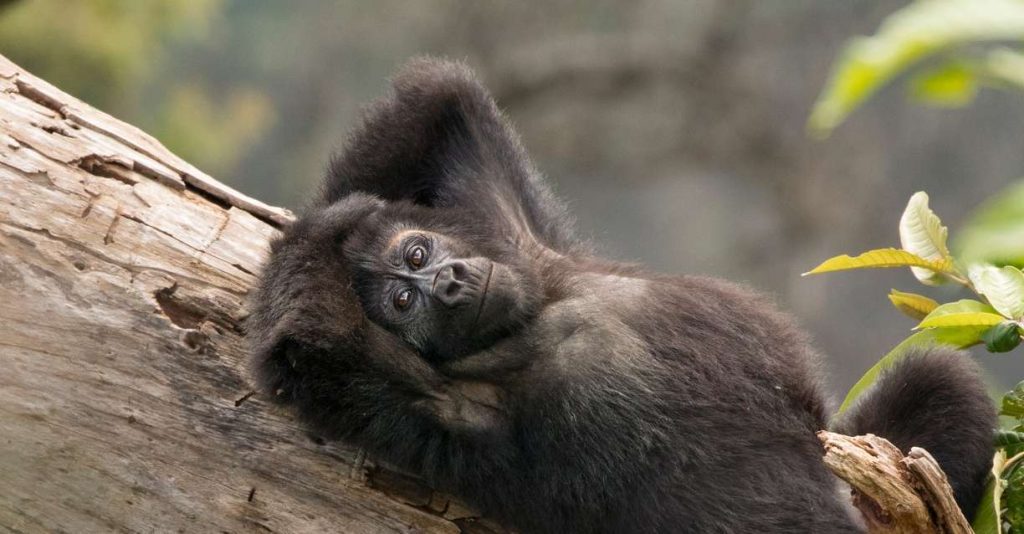
Kwitonda Gorilla Family in Volcanoes National Park Rwanda
How Kwitonda Compares With Other Families
Kwitonda sits in the larger and more demanding half of the park’s families. If you want a family with a cross-border story and a good-sized group, it is a strong choice.
| Family | Origin | Size in Sources | Trek |
| Kwitonda | Migrated from the Democratic Republic of the Congo | About 18 to 29 | Demanding to moderate, on Muhabura |
| Susa A | Fossey’s long-studied group | About 21 to 33 | Long and demanding |
| Agashya | Group 13, a takeover by Agashya | About 13 to 27 | Easy to medium |
| Amahoro | A peaceful group that lost members to Umubano | About 12 to 18 | Relatively strenuous |
| Muhoza | A new group formed in 2016 | Started with 7 | Short and easy |
How Allocation Works:
The Rwanda Development Board does not allow visitors to request specific families in advance. At about 7 am in Kinigi, rangers assign each group of up to eight to a family based on tracker reports, fitness and the permit allocation.
Because Kwitonda is described as a demanding trek in several sources, you are more likely to be assigned to it if you tell the rangers you are fit and ready for a longer hike.
Tell your operator in advance, and be honest at the briefing. If you are assigned to Kwitonda, expect a steady climb and a large family. If you are assigned elsewhere, remember that every family has a story, and your guide will tell it.
Who Kwitonda Suits
Kwitonda suits fit travelers who want a large family and a long story, photographers who enjoy a busy group, visitors with an interest in the cross-border landscape and trekkers who want a longer hike. It is also a good choice for those who have already seen an easier family and want something with more history.
It is less suitable for travellers with limited mobility, for anyone who needs a guaranteed short trek and for those who prefer a very small, quiet family. If that is you, tell the rangers, and expect a family such as Muhoza or Agashya instead.
Preparing for the Trek
The dry seasons, June to September and December to February, are the most comfortable. In the rainy seasons, the slopes can be very muddy, so allow extra time and energy.
- Walk on hills with a loaded daypack for several weeks, and practice on wet, uneven ground.
- Wear waterproof, broken-in boots, gaiters, long trousers, long sleeves and gardening gloves.
- Bring a waterproof jacket, warm layers, a hat and sunscreen.
- Hire a porter at about US$20 to US$30, and use a walking stick.
- Carry water, snacks and a camera with a rain cover, and do not use flash.
- Stay in Kinigi or Musanze, and arrange your early transfer the evening before.
Costs and Planning
A gorilla permit costs US$1,500 per person per trek, set by the Rwanda Development Board, with roughly 10 percent of permit revenue reported to be shared with communities around the park.
Our separate guides compare budget, mid-range, and luxury lodges near Volcanoes National Park. Book your permit early, and keep a spare day for weather.
Frequently Asked Questions
What does Kwitonda mean?
The humble one, in Kinyarwanda, after the founding silverback.
Where did the family come from?
It originally lived in the Democratic Republic of the Congo and migrated to Rwanda.
How big is the family?
About 18 to 29 members, with two to four silverbacks, depending on the source.
Is Kwitonda a hard trek?
Several sources describe it as demanding, on the slopes of Muhabura, though one places it on the lower inclines.
Can I book the Kwitonda family?
No. The Rwanda Development Board assigns families at the morning briefing.