Agashya Gorilla Family in Volcanoes National Park Rwanda
Few gorilla families have a better origin story than Agashya gorilla family. The group began as Group 13, named for the thirteen members counted when it was first habituated. It was led for years by a silverback called Nyakarima until another silverback, Agashya, whose name is often translated as the news, challenged him, defeated him and took the whole group, an event that sources describe as unprecedented in observed gorilla history. The family has carried his name ever since, and it remains one of the best known and most visited in Volcanoes National Park.
This guide tells the story and explains what you can expect from a trek. It covers the history and the takeover, the group’s size and composition as sources describe it, a leadership conflict between sources about who leads the family now, its territory on the slopes of Sabyinyo, how long the trek usually takes, what the group is like to watch and how family allocation works, since you cannot book Agashya in advance. Where sources disagree, the guide says so, and group details that change often are given as ranges.
Agashya at a Glance
The wide range of sizes reflects how quickly families change. A group that was described as 27 in one source may be 25 in another and 13 in a third, and each may be correct for the date it was written.
| Fact | Detail |
| Also known as | Group 13, from the 13 members when it was first habituated |
| Name | Agashya, reported as meaning the news, after the silverback who took over the group |
| Previous leader | Nyakarima, also spelled Nyakairima in some sources |
| Reported size | About 13 to 27 members, with about 25 in several 2026 sources |
| Territory | The slopes of Mount Sabyinyo and Mount Gahinga, shared with the Sabyinyo group, and sometimes the valley between Sabyinyo and Bisoke |
| Trek length | From about one to four hours in sources; described as easy to medium |
| Habituated | In the 1980s as Group 13, according to one source |
| Style | Described as calm to watch, but led by a security-conscious silverback who may move the family uphill |
From Group 13 to Agashya: The Origin of the Name
When the group was first habituated, researchers counted thirteen gorillas, and it became known simply as Group 13. It was led by a silverback named Nyakarima, and it stayed under his leadership for years. Habituation is the slow process of getting wild gorillas used to the presence of human observers, and it is the reason that visitors can approach a family safely and watch it behave naturally.
The change that gave the group its current name came when another silverback, Agashya, challenged Nyakarima. Sources describe how Agashya first watched and assessed Nyakarima’s strength, then challenged him to a fierce fight and took off with the whole group, a shock to Nyakarima and, in the words of one source, an unprecedented event in observed gorilla history. Agashya then moved the group up the volcano to secure it and to make sure that Nyakarima could not track them.
A Silverback Who Grew His Family
Under Agashya’s leadership, the family grew. Sources say it expanded from the original 13 to about 25 or even 27 members within about eight years, and that Agashya was known for recruiting lone gorillas and females from other families, making his group one of the largest in the park. One source says that in 2002 he brought together two families into one group, though other sources do not mention this, so treat it as an unconfirmed detail.
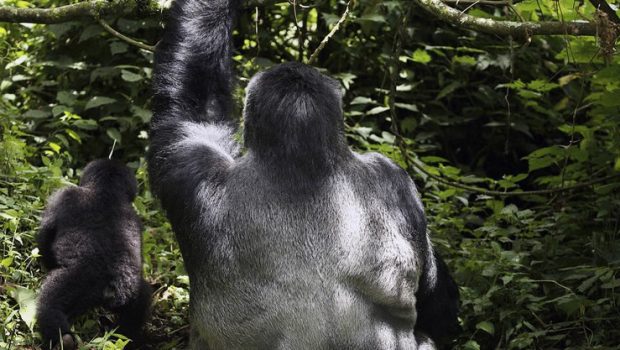
Agashya’s leadership style is described as a balance of strength, wisdom and mobility, and he is credited with bringing the group back to stability and growth. At various times the family has had over 25 to 30 members, which made it a lively group to watch, with babies holding on to their mothers, juveniles bouncing in and out of the vegetation and the silverback guarding his family.
Who Leads the Family Now? A Conflict in the Sources
Most pages, including several updated in 2026, describe Agashya as still the dominant silverback. One page, dated several months ago, gives a very different account: that a silverback named Isano took over the group in May 2021 from his father Agashya, who walked away after several months of ranging at the edge of the group, and that the family now has 13 gorillas made up of a silverback, two adult females, two blackbacks, four subadults, one juvenile and three infants.
Both accounts could be partly right, since silverbacks do age, step back or lose groups, and sizes change. The practical lesson is that you should not assume that the animal named on a website is the one in front of you. Ask your guide at the briefing who leads the family today, and enjoy learning the current story from the people who see the animals every day.
Understanding Silverback Succession
Leadership changes in gorilla families are normal, and they happen in several ways. A silverback may be challenged by a rival and lose the family, as Nyakarima did. He may grow old and be displaced by a younger male, or he may step back and let a son take over, as the one 2021 account describes. A young silverback may also leave to start a new group, taking females with him.
For visitors, the point is that families are not dynasties with fixed leaders. The Agashya story is one of the best-documented examples of an unusual takeover in which an entire group changed hands, and it is a reminder that gorilla society is a living, changing thing.
A Security-Conscious Leader: Why the Group Moves Uphill
One feature that sources repeat about the group is the silverback’s cautious streak. At the first sign of trouble, he is known to take his whole family up the volcano, higher into the forest. Agashya moved the group up the mountain when he sensed another silverback was about to challenge him, and sources say he has done the same in response to approaching trekkers.
For trekkers, this means two things. First, the family can be found lower down, in the gentle foothills of Sabyinyo and Gahinga, on some days and higher on others, which explains why trek length is quoted from about one hour to four hours. Second, if the silverback moves off, your guide may need to lead you after the family, and an easy trek can become a longer one. Keep a flexible attitude, and follow your guide.
Territory and the Trek
The Agashya family lives on the forested slopes of Mount Sabyinyo and Mount Gahinga, close to the point where Rwanda, Uganda and the Democratic Republic of the Congo meet in the Virunga massif. It shares its territory with the Sabyinyo group, which is also among the easiest to trek, and sometimes the family is found in the valley between Sabyinyo and Bisoke. Lucky hikers on Sabyinyo occasionally come across the family by chance.
Sources describe the trek as easy to medium. One puts the walk at 1.5 to 3 hours, another at one to four hours, and a guide to the family says that the exact time depends on where the silverback has taken the family on the day. The terrain is gentle by Volcanoes standards, with farmland and bamboo forest, but it can be muddy, steep in places and cold. Treat it as a moderate hike, and prepare as you would for any trek.
What the Hour With Agashya Is Like
Each family has its own atmosphere. Agashya is often described as a family where there is a lot going on at once, with young gorillas playing and the silverback overseeing. Take photographs, but put the camera down for a few minutes to watch with your own eyes.
- A larger family, with sources reporting about 25 members in several recent accounts, means more individuals to watch: adult females, juveniles and infants.
- Babies are a highlight, with sources mentioning seven infants in recent accounts.
- The silverback is described as a protective, vigilant leader who watches over his family.
- The group is described as calm and low-stress to track compared with some more territorial families.
- If the family feels threatened, the silverback may lead them uphill, so be ready to follow quietly.
A Note on Claims You May Read Online
A few claims appear on operator pages that should be treated with caution. One page says the family became widely known after appearing in the film Gorillas in the Mist, and another says the group lost six infants to a past tragedy before growing again with two new births.
Neither claim appears in the other sources used here, and the sources describing the Bwenge family make similar claims about infants and the film, so these may be confused between families. If a detail matters to you, ask your guide.
How Allocation Works: You Cannot Book Agashya
The Rwanda Development Board does not allow visitors to request specific families in advance. At about 7 am in Kinigi, rangers assign each group of up to eight visitors to a family based on tracker reports, the group’s fitness and the permit allocation.
Because Agashya is one of the shorter treks in most descriptions, you are more likely to be assigned to it if you ask for a short hike, and it is more likely to be a good match if you are travelling with someone who is less fit.
Tell your operator in advance, and tell the rangers honestly at the briefing. Accept the assignment, and do not argue. A family that is closer may turn out to be one of the more memorable, and the hour with the gorillas is the same length whichever you are given.
Who Agashya Suits
The family suits first-time trekkers who want a moderate walk, travelers with mixed fitness in the group, families with teenagers of at least 15, photographers who enjoy a lively group with infants and visitors with limited time. It is also a good choice for travellers who want to see how a family is led by a strong, active silverback.
It is less suitable for anyone who needs a guaranteed short trek, since the family can move uphill, and for those who want a specific history, such as the Fossey-era groups. If you want a long, demanding trek, ask for it, and expect Susa or Karisimbi instead.
Preparing for the Trek
The dry seasons, June to September and December to February, are the most comfortable. Rain is possible in every month in the highlands, so pack waterproofs in all seasons.
- Walk on hills with a loaded daypack for a few weeks, and break in waterproof boots.
- Pack gaiters, gardening gloves, long trousers, long sleeves and a waterproof jacket.
- Bring warm layers, a hat, sunscreen and a small daypack with water and snacks.
- Hire a porter at about US$20 to US$30, even for an easy trek.
- Carry a camera with a fast lens and a rain cover, and do not use flash.
- Stay in Kinigi or Musanze, and arrange your early transfer the evening before.
Costs and Planning
A gorilla permit costs US$1,500 per person per trek, set by the Rwanda Development Board, and includes park entry, ranger guides and one hour with the family. Roughly 10 percent of permit revenue is reported to be shared with communities around the park.
Golden monkey tracking, at about US$100, is a good add-on, and our separate guides cover budget, mid-range and luxury lodging near the park. Book your permit early, since peak months sell out.
Frequently Asked Questions
What is the Agashya gorilla family?
A habituated family in Volcanoes National Park, also called Group 13, named after the silverback who took over from Nyakarima.
Why is it called Group 13?
Because it had 13 members when it was first habituated.
How big is the family?
Sources range from about 13 to 27 members, with about 25 in several recent accounts.
Is Agashya an easy trek?
It is usually described as easy to medium, from about one to four hours, though the family may move uphill.
Can I book the Agashya family?
No. The Rwanda Development Board assigns families at the morning briefing, though you can request a short or long hike.