Cultural Tours in Rwanda
Cultural Tours in Rwanda; Clients booking a Rwanda safari tend to focus almost entirely on the wildlife, gorillas, chimpanzees, the Big Five, and that focus is reasonable given how strong those experiences are. What gets overlooked is how much cultural depth sits alongside the parks themselves, largely because Rwanda’s tourism marketing leans so heavily on primates that the country’s royal history, craft traditions, and genocide memorial sites rarely make it into a first conversation about the trip.
We think that is a genuine oversight, since several of these cultural stops rank among the more memorable parts of a Rwanda itinerary for travellers who make room for them.
This guide covers the cultural experiences worth building into a Rwanda trip, where they sit geographically relative to the main parks, and how much time each genuinely deserves. None of this requires sacrificing wildlife time; most of these stops fit naturally into travel days already built around transfers between Kigali and the parks.
Should You Add Cultural Tours to Your Itinerary?
Cultural tours suit nearly every Rwanda traveller, provided they are chosen deliberately rather than treated as filler between wildlife activities: Rwanda’s royal and pre-colonial history, its genocide history, and its living craft and dance traditions each offer a genuinely different lens on the country than a gorilla trek or game drive provides.
Travellers on a tightly compressed gorilla-only trip may reasonably skip most of this; those with even a spare half-day within a longer circuit tend to find at least one cultural stop among their most discussed memories afterward.
We are candid that not every cultural experience marketed to tourists in Rwanda carries equal weight or authenticity. Some village visits near the parks are built primarily for tour groups and feel accordingly staged, while others, particularly those with genuine community ownership and revenue-sharing structures, offer a considerably more substantive exchange. We steer clients toward the latter category specifically.
Why Rwanda’s Cultural Sites Matter
Iby’Iwacu Cultural Village, Near Volcanoes National Park
Founded partly by former poachers who once hunted gorillas and have since transitioned into conservation and tourism roles, Iby’Iwacu sits a short drive from Kinigi and offers a genuinely worthwhile half-day of traditional dance performances, demonstrations of pre-colonial Rwandan life, including a recreated king’s hut, banana beer brewing, and traditional medicine practices.
Its proximity to the gorilla trekking trailhead makes it an easy addition either the afternoon before or after a trek.
The King’s Palace Museum, Nyanza
Located in the former royal capital of Nyanza in southern Rwanda, this museum reconstructs the traditional royal palace of the Rwandan monarchy, including the distinctive long-horned Inyambo cattle historically kept for royal ceremonial purposes, alongside a modern building housing artefacts from the mid-twentieth-century monarchy.
It offers genuine insight into Rwanda’s pre-colonial political structure, a period that receives far less attention from most visitors than the colonial and post-independence history that dominates typical narratives.
The Ethnographic Museum, Huye
Widely regarded as one of the best museums in the region, the Ethnographic Museum in Huye, formerly Butare, houses an extensive collection covering Rwandan material culture, traditional crafts, agricultural tools, and historical photography. For travellers with a genuine interest in pre-colonial and colonial-era Rwandan society, this museum rewards a longer visit than its modest profile in most itineraries suggests.
Genocide Memorial Sites Beyond Kigali
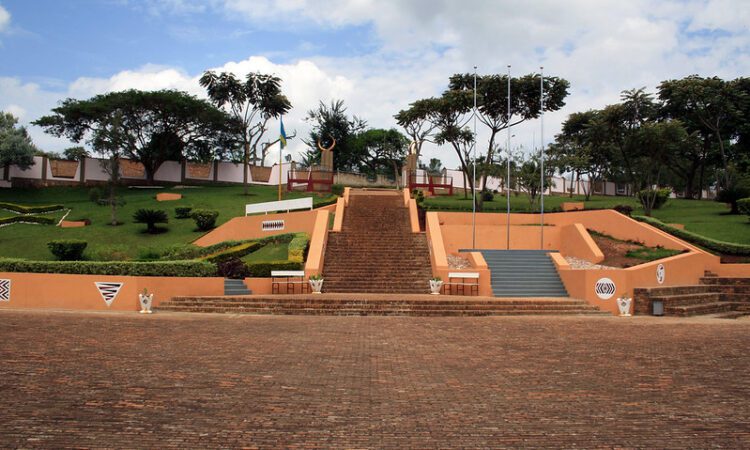
While the Kigali Genocide Memorial serves most travellers’ primary need for historical context, the Nyamata and Murambi memorial sites, both reachable as day trips from Kigali, offer a more direct, considerably more difficult encounter with the physical reality of the 1994 genocide, preserved largely as they were found.
These are not sites for every traveller, and we discuss them candidly with clients before recommending them, but for those specifically seeking a deeper historical understanding, they are significant.
The Gorilla Guardians Village
A separate community initiative near Volcanoes National Park, run by former poachers now working in conservation, offering cultural performances and craft demonstrations similar in spirit to Iby’Iwacu but on a smaller, more intimate scale.
Both are worth comparing with your operator, since the choice often comes down to group size and available time rather than a clear quality difference.
Craft Cooperatives and Weaving Traditions
Beyond the formal museum and village circuit, a number of women’s craft cooperatives across Rwanda, several linked to conservation programmes around Volcanoes National Park and Nyungwe, produce traditional woven baskets and the distinctive imigongo geometric art, made from cattle dung and natural pigments in a technique unique to Rwanda.
Visiting one of these cooperatives, often arranged through your lodge, offers a genuine window into a craft tradition actively being preserved and passed to younger generations, alongside a straightforward opportunity to purchase directly from the artisans themselves.
Traditional Dance and Intore Performances
The Intore dance, historically performed for Rwandan kings and characterised by its dramatic, warrior-inspired choreography and elaborate headdresses, remains a centrepiece of cultural performances at Iby’Iwacu and similar venues. Beyond its visual spectacle, understanding the dance’s historical role in royal court life adds meaningful context to a performance that might otherwise be enjoyed purely as entertainment.
Where Cultural Tours Fit on a Rwanda Itinerary
| Site | Location | Best Paired With |
| Iby’Iwacu Cultural Village | Near Kinigi, Volcanoes National Park | The afternoon before or after gorilla trekking |
| King’s Palace Museum | Nyanza, southern Rwanda | A stop en route between Kigali and Nyungwe |
| Ethnographic Museum | Huye (Butare), southern Rwanda | Combined with the King’s Palace Museum on the same southern route |
| Nyamata / Murambi Memorials | Day trips from Kigali | A Kigali city day, alongside the main Genocide Memorial |
Nyamirambo, Kigali’s Own Cultural Neighbourhood
Our dedicated Kigali City Tours guide covers this in more depth, but it deserves mention here too: Nyamirambo, one of Kigali’s oldest neighbourhoods, offers guided walking tours through its markets, mosque, and kitenge fabric workshops via the Nyamirambo Women’s Center, a genuinely worthwhile urban complement to the more rural cultural experiences near the parks themselves.
When to Visit
Cultural sites in Rwanda are considerably less seasonally sensitive than the parks, since none depend on wildlife visibility or trekking trail conditions. Most operate year-round on a fixed schedule, making them a genuinely flexible addition to any itinerary regardless of when your trip falls.
Budgeting for Cultural Tours
| Site | Approx. Cost | Notes |
| Iby’Iwacu Cultural Village | US$30 – 50 per person | Includes performances and guided demonstrations |
| King’s Palace Museum | US$10 – 15 per person | Modest entry fee, guided tour included |
| Ethnographic Museum | US$10 – 15 per person | Modest entry fee |
| Genocide memorial sites | Free to modest entry, donations welcomed | The Kigali Genocide Memorial requests a voluntary contribution |
Choosing Between Iby’Iwacu and the Gorilla Guardians Village
Both venues share a similar founding story, former poachers transitioning into conservation and tourism work, and offer broadly comparable programmes of dance, craft demonstration, and traditional life recreation. In practice, the choice often comes down to group size, scheduling availability on the day, and which venue your specific lodge has an established relationship with, rather than any significant difference in quality or authenticity between the two. We generally suggest asking your operator which they can arrange most conveniently around your trekking schedule rather than treating this as a major decision in its own right.
Planning Advice
- Add Iby’Iwacu or the Gorilla Guardians Village to your Volcanoes National Park stay specifically, since both sit a short drive from Kinigi and fit naturally around a trekking day.
- Combine the King’s Palace Museum and Ethnographic Museum on the same day if driving the southern route between Kigali and Nyungwe, since both sit within a similar area.
- Discuss genocide memorial sites beyond Kigali candidly with your operator before booking, given their considerably heavier emotional weight relative to the main Kigali memorial.
- Book cultural village visits through operators with transparent community revenue-sharing structures, favouring genuine local ownership over purely tourist-facing operations.
- Treat cultural stops as genuine additions worth dedicated time, not filler squeezed into transfer days without proper attention.
- Ask your operator about a craft cooperative visit near your lodge, whether at Volcanoes National Park or Nyungwe, as a low-cost, high-value cultural addition.
Who Cultural Tours Suit Best
| Traveller Type | Recommendation |
| First-time visitor with time to spare | Excellent fit; Iby’Iwacu or the King’s Palace Museum add genuine depth without much added logistics. |
| History enthusiast | Strong candidate for the Ethnographic Museum and King’s Palace Museum specifically. |
| Traveller on a tight gorilla-only itinerary | May reasonably skip most cultural stops, though Iby’Iwacu remains a low-effort addition near Kinigi. |
| Traveller with a serious interest in genocide history | Should consider Nyamata or Murambi alongside the Kigali memorial, with appropriate emotional preparation. |
| Family with children | Iby’Iwacu’s performances are generally the most accessible and engaging option for younger travellers. |
Frequently Asked Questions
Is Iby’Iwacu Cultural Village worth visiting?
Yes, particularly given its genuine community ownership structure involving former poachers now working in conservation and tourism, and its convenient location near the Volcanoes National Park trailhead.
Should I visit genocide memorial sites beyond Kigali?
Only if you are prepared for a considerably more direct and difficult historical encounter than the Kigali memorial provides. We discuss this candidly with clients rather than recommending it universally.
How much time should I allocate to cultural tours?
A half-day for Iby’Iwacu or the Gorilla Guardians Village, and a similar half-day for the King’s Palace Museum and Ethnographic Museum combined, if travelling the southern route toward Nyungwe.
Are cultural tours suitable for children?
Generally yes, particularly Iby’Iwacu’s dance performances and craft demonstrations. Genocide memorial sites require more careful judgment depending on age and maturity.
Can I combine cultural tours with gorilla trekking on the same day?
Yes, most commonly in the afternoon following a morning trek, since Iby’Iwacu and similar villages sit a short drive from Kinigi and require only a few hours.
Do cultural tours require advance booking?
Generally recommended, particularly for larger groups, though availability is considerably more flexible than gorilla or chimpanzee trekking permits.
Do cultural tours require advance booking?
Generally recommended, particularly for larger groups, though availability is considerably more flexible than gorilla or chimpanzee trekking permits.
What is imigongo art, and where can I see it made?
A distinctive Rwandan geometric art form made from cattle dung and natural pigments, traditionally used to decorate walls and now produced as framed art and craft items. Several cooperatives near Volcanoes National Park and southern Rwanda welcome visitors to watch the process and purchase directly.
Are craft cooperative visits a good way to support local communities?
Yes, generally more directly than a standard souvenir purchase, since these cooperatives are typically women-led enterprises where proceeds go straight to the artisans and community programmes rather than through a longer commercial chain.