Lake Manyara National Park
At roughly 330 square kilometres, Lake Manyara national park is small enough to fully explore in half a day, and clients sometimes assume that means it deserves only a brief stop on the way to somewhere bigger. We think that undersells a genuinely distinctive park, one that packs groundwater forest, open grassland, and a soda lake beneath the dramatic wall of the Rift Valley escarpment into a footprint a fraction of the size of Serengeti or Tarangire, and delivers a habitat diversity that its larger neighbours cannot match acre for acre.
Manyara’s specific claim to fame, tree-climbing lions, deserves an honest explanation before you arrive, since the behaviour is genuinely unusual, not fully understood by researchers, and not guaranteed on any single visit. Alongside the lions, the park’s lakeside flamingo flocks and hippo pools give Manyara a birding and wetland character that distinguishes it clearly from the dry savanna parks that dominate most of a northern Tanzania itinerary.
Should You Visit Lake Manyara?
Lake Manyara suits travellers building a varied northern Tanzania circuit who want habitat diversity within a short visit, rather than those seeking dense predator concentrations or a full-day game drive destination: the park’s small size means a half-day to full-day visit covers its highlights thoroughly, making it an efficient addition to a longer itinerary rather than a standalone multi-night destination for most travellers.
The tree-climbing lion phenomenon deserves particular honesty. Sightings happen, and local guides have genuine skill in checking the specific acacia and fig trees where lions are known to rest, but this is not a guaranteed spectacle, and we set that expectation clearly rather than oversell a behaviour that remains genuinely unpredictable.
Why Lake Manyara Matters
Tree-Climbing Lions
Manyara’s lions are among a small number of documented lion populations anywhere in Africa known to regularly climb trees, a behaviour some researchers attribute to escaping biting insects or the heat of the ground, though no single explanation has been definitively confirmed. When lions are found resting in the branches of the park’s acacia woodland, it remains one of the more striking sights available on a Tanzania safari.
A Genuine Groundwater Forest
Fed by underground springs rather than surface rainfall alone, Manyara’s forest supports blue monkey, olive baboon in substantial troops, and a canopy dense enough to feel genuinely different from the open savanna landscapes that dominate most of northern Tanzania’s parks.
Flamingos and the Soda Lake
Lake Manyara itself, a shallow, alkaline soda lake occupying much of the park’s eastern section, has historically drawn large flamingo flocks feeding on algae, alongside pelicans and a strong wider waterbird population, giving the park a genuinely different visual character from its neighbours’ dry grassland scenery.
A Changing Lake: What Rising Water Levels Mean for a Visit
Lake Manyara’s water level has genuinely fluctuated in recent years, following a broader pattern affecting Rift Valley lakes across the wider region. After a period of shrinkage and hypersaline conditions in the years following 2019, heavier rainfall since 2020 has pushed water levels back up, and by 2024 and 2025 this had flooded parts of the surrounding lakeshore grassland and diluted the algal blooms flamingos depend on for food, reducing their numbers at Manyara specifically compared with the dramatic flocks the park was once best known for.
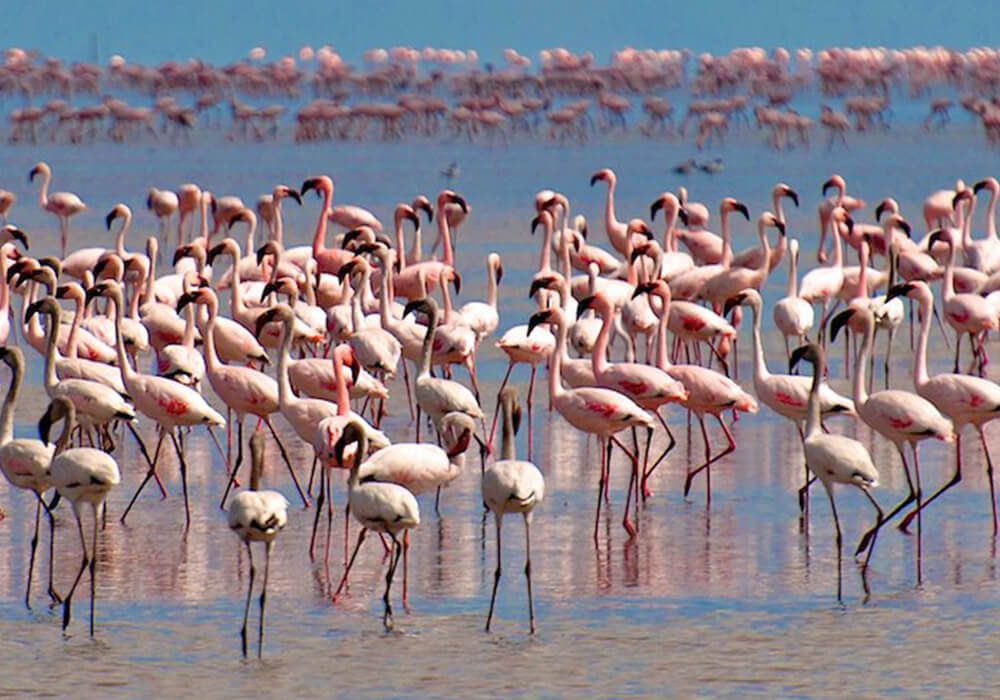
This matters for setting honest expectations: flamingo sightings here remain possible but are genuinely less reliable than a general guide might suggest, and some birdlife has correspondingly shifted toward other Rift Valley soda lakes, including Lake Natron further north. We mention this directly because informed travellers researching Manyara specifically for its flamingos deserve an accurate, current picture rather than an outdated one, and because the tree-climbing lions and groundwater forest remain a strong draw regardless of how the lake itself is behaving in a given season.
Activities to Do in the Park
Game Drives
Game drives through the groundwater forest and along the lake shoreline form the core activity, with guides specifically checking known tree-climbing lion locations among the acacia woodland while also covering open grassland areas for buffalo, giraffe, and zebra.
The Treetop Canopy Walkway
Suspended among the forest’s upper branches, the canopy walkway offers a genuinely different vantage point on Manyara’s groundwater forest ecosystem, putting visitors at eye level with blue monkey troops and canopy birdlife rarely seen clearly from a vehicle below.
Birdwatching Along the Lakeshore
The lakeshore rewards visitors with a strong wider waterbird list even when flamingo numbers are lower than historical peaks, best pursued slowly on foot or from a stationary vehicle rather than a moving game drive given how much bird activity concentrates in specific shallow-water areas.
Canoeing
Offered seasonally depending on water levels, canoeing on Lake Manyara provides a rare on-water safari perspective, paddling near hippo pods and wading birds from a genuinely different angle than any vehicle-based activity allows.
Mountain Biking
Along park-adjacent trails, arranged through select operators, mountain biking offers an active alternative for travellers wanting to explore the escarpment base and surrounding countryside beyond the core wildlife-viewing area.
Night Game Drives
Available through certain lodges bordering the park in the surrounding conservation area, night drives offer a chance at nocturnal species not typically seen during standard daytime game drives within the park itself.
Maji Moto Hot Springs
Within the park’s boundary, this cluster of hot springs adds a short, low-effort stop combining natural geothermal activity with the surrounding forest scenery, typically built into a half-day game drive circuit.
Wildlife Beyond the Lions and Flamingos
Manyara’s forest and grassland support healthy populations of elephant, buffalo, and giraffe, alongside large troops of olive baboon that are among the most habituated and easily observed anywhere in Tanzania. The park’s hippo pools, fed by the same groundwater springs that sustain the forest, offer reliable sightings without the crowding found at some larger parks’ equivalent water features.
Where Lake Manyara Fits on a Northern Tanzania Circuit
Manyara sits roughly two hours from Arusha by road, directly on the standard route toward Ngorongoro and Serengeti, making it an efficient stop rather than a destination requiring its own dedicated transfer. Most itineraries build in a half-day to full-day visit here on the way to or from the rest of the northern circuit.
When to Visit
| Season | Months | What to Expect |
| Dry season | June – October | Easier game viewing, firmer forest trails, generally lower lake levels |
| Wet season | November – May | Lush forest, higher lake levels in recent years, variable flamingo presence |
Budgeting for Lake Manyara
Non-resident park entry runs at approximately 47.80 to 59 US dollars per person per day depending on the specific tariff schedule quoted, placing Manyara in Tanzania’s mid-range fee tier alongside Tarangire and Arusha National Park, considerably below Serengeti and Ngorongoro’s premium pricing. Confirm the current rate with your operator, since figures are periodically revised.
Where to Stay
Lodges perched on the Rift Valley escarpment above the park, offering sweeping views down over the lake and forest.
Properties near Mto wa Mbu town at the park’s edge, a practical, well-located base for a half-day visit.
Tented camps within the wider conservation area surrounding the park, suited to travellers wanting a longer stay in the region.
Frequently Asked Questions
Are tree-climbing lions guaranteed at Lake Manyara?
No. The behaviour is genuine and well documented, but sightings are not guaranteed on any single visit, since it remains an unpredictable, not fully understood phenomenon.
Are the flamingos still at Lake Manyara?
Sightings remain possible, but rising water levels in recent years have diluted the algal blooms flamingos feed on, reducing their numbers here compared with the park’s historical reputation. Some birds have shifted toward other Rift Valley lakes as a result.
How long should I spend at Lake Manyara?
A half-day to full-day visit covers the park’s highlights thoroughly given its small size, making it an efficient stop rather than a multi-night destination for most travellers.
Is the canopy walkway worth doing?
Yes, particularly for a different perspective on the groundwater forest and its resident blue monkey troops, offering views not achievable from a standard vehicle-based game drive.
Can I combine Lake Manyara with Tarangire?
Yes, both sit along the same standard route between Arusha and the rest of the northern circuit, making this a common and efficient pairing.
Why do Manyara’s lions climb trees?
Researchers have proposed several explanations, escaping biting insects or ground-level heat among them, but no single cause has been definitively confirmed, making it one of the more genuinely mysterious behaviours documented in African lion populations.
Is canoeing available year-round?
No, canoeing on Lake Manyara depends on water levels and is offered seasonally rather than as a year-round guaranteed activity.