Chyulu Hills National Park
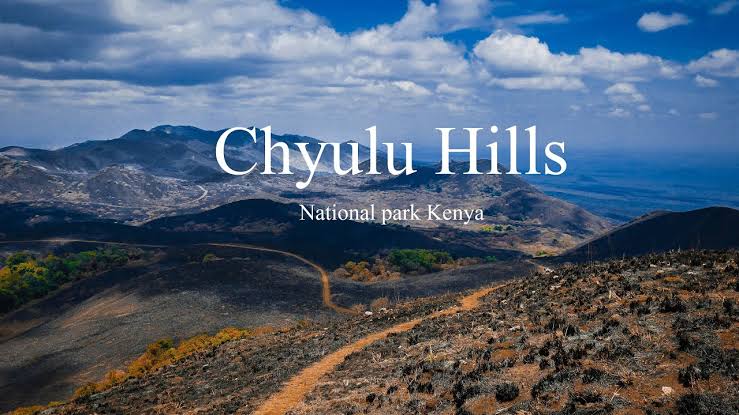
Chyulu Hills National Park sits in southeastern Kenya, forming a narrow volcanic range that separates Tsavo West National Park to the southeast from the Amboseli plains to the northwest. The park covers 741 square kilometres of picturesque ash cone hills, ranging from roughly 50 to 1,000 feet in height, and forms a key part of the wider Tsavo-Amboseli ecosystem, one of the largest continuous elephant ranges in Africa.
Overview
Chyulu Hills owes much of its international recognition to Ernest Hemingway, whose 1935 book Green Hills of Africa described the range in terms evocative enough that the name stuck in the popular imagination, drawn from his own 1933 safari through the region. The hills themselves are of relatively recent volcanic origin, composed of several hundred small lava flows and cones, with thicket and grassland covering the lower slopes and genuine montane forest taking over above roughly 1,800 metres.
The park forms part of the broader Tsavo-Amboseli Arc, an area of largely empty, thinly populated bushland that supports what’s often described as the world’s largest single assembly of elephants, with regional estimates exceeding 30,000 individuals moving across the combined Tsavo, Amboseli, and Chyulu Hills landscape depending on season and water availability.
Unusually for a Kenyan national park, Chyulu Hills has no permanent rivers of its own. Instead, rainfall percolating through the range’s porous volcanic rock feeds numerous permanent freshwater sources in the surrounding plains, most notably Mzima Springs in neighbouring Tsavo West, meaning the hills function as a genuine water tower for the wider ecosystem even without visible surface water of their own.
Best Time to Visit
The dry seasons, June through October and January through March, offer the clearest views and the most comfortable hiking conditions across the hills, though as with much of southern Kenya’s ecosystem, wildlife movement here follows water availability across the wider Tsavo-Amboseli region rather than being confined strictly to the park’s own modest area.
Getting There and Where to Stay
Getting There
Chyulu Hills is most commonly accessed via Tsavo West National Park or from the Amboseli side, given the park’s position directly between the two. There is no dedicated visitor infrastructure within Chyulu Hills itself, and most travellers experience the range as a scenic backdrop to game drives in the neighbouring parks, or arrange a specific guided visit through an operator based in one of the surrounding properties.
Where to Stay
Chyulu Hills National Park has no accommodation of its own, and travellers wanting to explore the range typically base themselves at lodges within Tsavo West National Park or at properties in the ungazetted, private conservancy sections of the Chyulu Hills, several of which offer walking safaris and horseback riding across the hills as part of a broader stay.
Activities
Chyulu Hills is best experienced as a scenic and hiking-focused destination rather than a conventional game-drive park, given both its terrain and its lack of dedicated wildlife-viewing infrastructure.
Hiking Across the Ash Cones
The range’s distinctive ash cone hills, some rising to roughly 1,000 feet, offer genuine hiking terrain distinct from anywhere else in southern Kenya’s largely flat savanna landscape.
Horseback Safaris
Several private conservancy properties within the wider Chyulu Hills ecosystem offer horseback riding across the range, a genuinely different way to experience this volcanic landscape than a standard vehicle-based drive.
Scenic Game Drives from Tsavo West or Amboseli
Most visitors experience Chyulu Hills as a dramatic scenic backdrop during game drives based in the neighbouring parks, where the hills form a striking silhouette along the horizon.
Exploring the Shetani Lava Flow Connection
The famous Shetani lava flow in neighbouring Tsavo West is geologically connected to the Chyulu Hills’ volcanic history, and understanding this link adds genuine context to a visit to either location.
Attractions
Chyulu Hills’ attractions are almost entirely geological and literary, a landscape defined by relatively recent volcanic activity and a famous literary association.
The Ash Cone Hills
Ranging from roughly 50 to 1,000 feet in height, these volcanic cones give the range its distinctive, picturesque profile, visible for considerable distances across the surrounding Tsavo-Amboseli plains.
Hemingway’s Green Hills of Africa
Ernest Hemingway’s 1935 book, recounting his 1933 Kenya safari, brought international literary attention to the Chyulu Hills, and the name has stuck in popular usage ever since.
The Tsavo-Amboseli Elephant Arc
Chyulu Hills forms a critical part of one of the largest continuous elephant ranges in Africa, with regional populations across the combined ecosystem estimated at over 30,000 individuals.
The Connection to Mzima Springs
Rainfall filtering through the Chyulu Hills’ porous volcanic rock feeds Mzima Springs in neighbouring Tsavo West, meaning the range functions as a genuine, if invisible, water source for one of southern Kenya’s most celebrated natural attractions.
Views Across the Tsavo-Amboseli Ecosystem
From the higher points of the range, sweeping views extend across both Tsavo West and, on clear days, toward Amboseli and Kilimanjaro beyond.
Wildlife Highlights
Elephant of the Tsavo-Amboseli Arc
Chyulu Hills sits within one of the largest continuous elephant ranges anywhere in Africa, with animals moving freely between the hills and the surrounding Tsavo and Amboseli ecosystems depending on season.
Buffalo, Eland, and Mountain Reedbuck
The hills’ varied thicket, grassland, and montane forest support these species alongside bushbuck, giraffe, and zebra, though wildlife density here is generally lower than in the neighbouring, better-known parks.
Leopard and Lion
Present within the wider Chyulu Hills ecosystem, though considerably more elusive here than in Tsavo West or Amboseli given the range’s rugged terrain and limited visitor infrastructure.
Fun Facts
- Ernest Hemingway’s 1935 book Green Hills of Africa, describing his 1933 Kenya safari, brought international literary fame to the Chyulu Hills.
- The hills have no permanent rivers of their own, yet rainfall filtering through their volcanic rock feeds Mzima Springs, one of the most famous water sources in neighbouring Tsavo West National Park.
- The Chyulu Hills are of relatively recent volcanic origin, composed of several hundred small lava flows and ash cones.
- The combined Tsavo-Amboseli ecosystem, of which Chyulu Hills forms a key part, supports an estimated elephant population exceeding 30,000, one of the largest continuous elephant ranges in Africa.
- Chyulu Hills National Park has no dedicated visitor accommodation of its own, making it one of the few Kenyan national parks typically experienced as an extension of a neighbouring park rather than a standalone destination.
Frequently Asked Questions
Can I stay inside Chyulu Hills National Park?
No, the park has no accommodation of its own. Most visitors base themselves in neighbouring Tsavo West National Park or at private conservancy properties within the wider Chyulu Hills ecosystem.
Why are the Chyulu Hills famous?
Largely due to Ernest Hemingway’s 1935 book Green Hills of Africa, which described the range following his 1933 Kenya safari, giving it lasting international literary recognition.
What is the connection between Chyulu Hills and Mzima Springs?
Rainfall filtering through the Chyulu Hills’ porous volcanic rock feeds Mzima Springs in neighbouring Tsavo West National Park, meaning the range functions as an invisible but essential water source for one of southern Kenya’s most famous attractions.
Is Chyulu Hills a good destination for wildlife viewing?
It’s better understood as a scenic and hiking destination than a dedicated game-viewing park, given its rugged terrain and lack of visitor infrastructure. Most wildlife viewing here happens as part of a broader Tsavo West or Amboseli itinerary.
How large is the elephant population in this region?
The wider Tsavo-Amboseli ecosystem, of which Chyulu Hills forms a part, supports an estimated elephant population exceeding 30,000, one of the largest continuous elephant ranges anywhere in Africa.