Lake Mburo National Park
Lake Mburo National Park is the smallest savannah park in the country’s main circuit where walking safaris, night game drives, and horseback safaris are all permitted, largely because it holds no resident elephant or buffalo population dense enough to make those activities unsafe. For travellers who have done a few conventional game drives elsewhere and want a different way of experiencing the bush, that combination of activities is genuinely hard to find elsewhere in Uganda.
Should You Visit Lake Mburo?
Lake Mburo suits travellers who want variety in how they experience wildlife, rather than sheer density or drama of sightings: it is Uganda’s smallest savannah park, at around 370 square kilometres, and its wildlife list, while healthy, does not include elephant, and lion and leopard sightings are rare enough that we do not set that expectation for clients. What it offers instead is walking safaris among zebra and impala, a boat cruise for hippo and birdlife, and a genuinely convenient stopover roughly three to four hours from Kampala, directly on the route toward Bwindi and Queen Elizabeth National Park.
The park’s compact size cuts both ways. A half-day or overnight stay covers Mburo’s highlights comfortably, which makes it efficient for travellers who do not want to dedicate a full extra day to a smaller park. At the same time, that same compactness means travellers expecting the density and drama of the Maasai Mara or even Queen Elizabeth will find Mburo comparatively quiet. We position it honestly to clients as a well-rounded stopover and activity break, not as a headline safari destination in its own right.
Where Mburo performs unusually well is for travellers who specifically want zebra and impala, both largely confined to this part of Uganda within the country’s park system, plus eland, the continent’s largest antelope, seen here more reliably than almost anywhere else in Uganda. For birders, the lake’s papyrus swamps and acacia woodland support a strong list including the African finfoot and, on quieter mornings, the shoebill stork, though shoebill sightings here are less consistent than at dedicated sites like Mabamba Swamp.
Reasons to go to Lake Mburo National Park
The Only Uganda Park for Walking and Night Safaris
Most Ugandan parks restrict travellers to vehicle-based game drives because of dangerous game, elephant and buffalo in particular, moving unpredictably through dense bush. Mburo’s smaller and more open habitat, combined with a lower density of those species, allows Uganda Wildlife Authority rangers to lead walking safaris and night drives here, both activities that reveal a different rhythm of the bush: the careful tracking of impala herds on foot, or the eyes of bushbabies and genets picked out by spotlight after dark. Clients consistently tell us these activities, more than the game drives themselves, are what they remember from Mburo.
A Landscape of Rolling Hills and Papyrus Lakes
Mburo sits within a chain of five lakes surrounded by rolling hills, acacia woodland, and rocky outcrops, a landscape that feels distinct from both Uganda’s rainforest parks and its flatter northern savannahs. The boat cruise on Lake Mburo itself, roughly two hours, brings close views of hippo pods, occasional crocodile, and a strong supporting cast of waterbirds, all without the vehicle-based approach used elsewhere.
A Genuine Convenience for Itinerary Planning
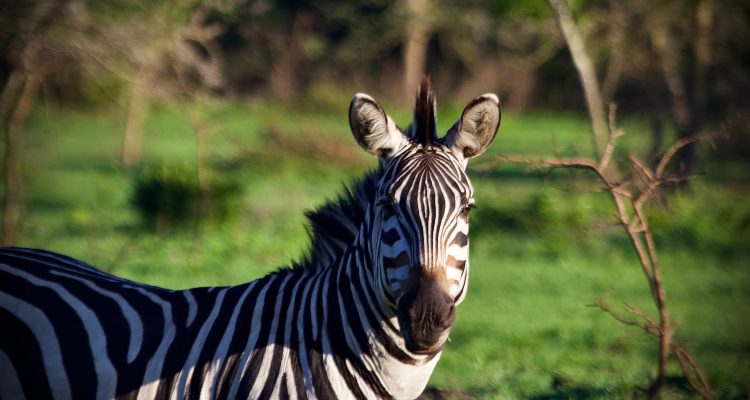
Mburo’s location, directly on the main road between Kampala and Uganda’s western parks, is arguably its greatest practical strength. Rather than treating the long drive to Bwindi as dead time, an overnight stop here breaks the journey into two manageable days and adds a genuinely different wildlife experience rather than simply a rest stop. We build Mburo into the large majority of our western Uganda itineraries for this reason alone.
Where Lake Mburo Fits on a Uganda Itinerary
Lake Mburo sits roughly 230 kilometres southwest of Kampala, a drive of three to four hours on generally good tarmac, making it Uganda’s most accessible savannah park by road. Its position directly along the route to Bwindi and Queen Elizabeth is what makes it so useful for itinerary planning, rather than requiring travellers to detour off their main circuit.
| From | Approx. Distance / Time | Notes |
| Kampala / Entebbe | 230 km, 3 – 4 hours | Good tarmac road for most of the route. |
| Bwindi Impenetrable National Park | continuing 4 – 5 hours | Standard overnight stopover point on this long drive. |
| Queen Elizabeth National Park | continuing 3 – 4 hours | Also usable as a stopover on this route. |
For travellers flying directly into Bwindi or Queen Elizabeth to save time, Mburo is easy to skip without loss, since it adds the most value specifically as a road stopover rather than as a flight destination. For those driving the western circuit regardless, it is one of the more efficient additions available.
When to Visit
| Season | Months | What to Expect |
| Dry Season | June – September, December – February | Best visibility for game drives and walking safaris, wildlife concentrated near remaining water. |
| Wet Season | March – May, October – November | Lush scenery, birdlife at its most active, muddier walking trails and some interior roads harder going. |
Because Mburo is usually a one or two night stop within a longer itinerary, we rarely recommend restructuring an entire trip’s timing around this park alone. If your overall Uganda trip falls in the dry season, Mburo will perform well; if it falls in the wetter months, the park remains entirely workable and the birding, in particular, tends to improve.
Budgeting for Lake Mburo
Mburo is one of the more affordable stops on a Uganda circuit, both because park fees are lower than at the country’s gorilla parks and because it does not require the specialised guiding or permit costs that primate trekking involves. Non-resident park entry fees are modest by regional standards, and activities like the boat cruise and walking safaris carry their own smaller add-on fees, typically in the range of 30 to 50 US dollars per person.
| Tier | Approx. Cost (per person/night, full board) | What You Get |
| Budget | US$50 – 100 | Community campsites and simple bandas, basic facilities, often run in partnership with local communities. |
| Mid-Range | US$140 – 250 | Established lodges and tented camps with en-suite rooms and included activities such as walking safaris. |
| Luxury | US$300 – 500+ | Boutique tented camps with lake or hill views, higher service levels, and more flexible activity scheduling. |
Given Mburo’s role as a stopover rather than a headline stop, we generally advise clients to keep accommodation here comfortable but modest, reserving the larger share of the accommodation budget for Bwindi or Queen Elizabeth, where more time will typically be spent.
Where to Stay
Inside or Bordering the Park
- Mihingo Lodge, perched on a rocky outcrop with sweeping views, a well-regarded upper-mid to luxury option known for its horseback safaris.
- Rwakobo Rock and similar mid-range tented camps, offering comfortable, unfussy bases close to the park’s activities.
- Rwonyo Rest Camp, the Uganda Wildlife Authority’s own budget-friendly bandas and campsite near park headquarters.
Just Outside the Park
- A smaller number of lower-cost guesthouses along the main highway, useful for travellers purely using Mburo as an overnight waypoint rather than a wildlife-focused stop.
Activities to do in the Park
- Walking safaris with an armed ranger, tracking zebra, impala, eland, and warthog on foot, unique among Uganda’s main parks.
- Night game drives, revealing nocturnal species such as bushbabies, genets, and occasionally leopard, rarely seen elsewhere in Uganda after dark.
- Boat cruises on Lake Mburo, around two hours, for hippo, crocodile, and waterbirds including the African fish eagle and, on good days, the African finfoot.
- Horseback safaris, offered by select lodges, a genuinely distinctive way to approach grazing wildlife at close range.
- Standard vehicle game drives, particularly effective in the early morning for zebra, eland, buffalo, and topi.
We recommend combining at least one walking or night activity with a standard game drive rather than relying on vehicle drives alone, since the walking and night components are what distinguish Mburo from every other park on a typical Uganda itinerary.
Who Lake Mburo Suits Best
| Traveller Type | Recommendation |
| Traveller driving to Bwindi or Queen Elizabeth | Ideal overnight stopover that adds genuine wildlife value rather than dead travel time. |
| First-time safari-goer wanting variety | Strong fit given the combination of walking, night drive, boat cruise, and vehicle game drives in one small park. |
| Horse riding enthusiast | One of very few places in East Africa offering horseback safaris among plains game. |
| Traveller chasing lion, leopard, or elephant sightings | Better served by Queen Elizabeth or the Maasai Mara; Mburo’s density of these species is low. |
| Birder | Rewarding for papyrus and acacia species, with an outside chance of shoebill, though dedicated shoebill sites remain more consistent. |
| Time-limited traveller flying between parks | Easy to skip without significant loss if road stopovers are not part of the itinerary. |
Frequently Asked Questions
Is Lake Mburo worth visiting if I am already going to Bwindi and Queen Elizabeth?
If you are driving between those parks, yes, since Mburo sits directly on the route and adds walking and night safaris unavailable elsewhere on the circuit. If you are flying directly between parks, it is easy to omit without significant loss.
Can I see the Big Five at Lake Mburo?
No. Mburo has no elephant population, and rhino, black or white, are not present in the park; lion and leopard sightings occur but are uncommon. The park’s strength lies in plains game, walking safaris, and birdlife rather than Big Five viewing.
Are walking safaris safe at Lake Mburo?
Yes, when conducted with an armed Uganda Wildlife Authority ranger, which is required for all walking activities. The park’s lower density of dangerous game is precisely why walking safaris are permitted here when they are restricted elsewhere in Uganda.
How long should I stay at Lake Mburo?
One night is usually sufficient to cover a game drive, a walking safari, and the boat cruise. Travellers with a specific interest in horseback safaris or birding sometimes extend to two nights.
Can I self-drive through Lake Mburo?
Yes, the park’s road network is manageable for a standard 4×4 in most conditions, including much of the wetter season, making it one of the more self-drive-friendly parks in Uganda.
What is the best time of day for the boat cruise?
Early morning generally offers the most active birdlife and hippo movement, though many lodges also run a late afternoon cruise timed for good light and cooler temperatures.