Kidepo Valley National Park
Kidepo Valley national park sits in the country’s far northeastern corner, closer to South Sudan and Kenya than to Kampala, and getting there has historically meant either a long day of driving or a charter flight most travellers had not budgeted for.
Having guided clients through Kidepo for years, our answer has stayed consistent: for travellers who can afford the time or the flight, it delivers wildlife density and scenery that genuinely rivals anywhere else on the continent, with almost none of the vehicle traffic found in Uganda’s better-known parks.
What makes Kidepo worth the honest conversation about logistics is what waits on the other side of them. This is the only park in Uganda where cheetah, ostrich, bat-eared fox, and aardwolf appear on a game drive checklist, species entirely absent from the rest of the country’s parks because Kidepo’s semi-arid Karamoja landscape has more in common with Kenya’s northern frontier than with Uganda’s forests and wetlands.
It is also, by most measures, one of the least visited major parks in East Africa, which means the wildlife you do find, you often find without another vehicle in sight.
Should You Visit Kidepo?
Kidepo suits travellers who want genuine wilderness and are willing to fly rather than commit two full days each way to the drive: the park sits roughly 700 kilometres from Kampala, a nine to ten hour road journey, or about two hours by scheduled charter flight to the Lomej airstrip near Apoka. For travellers with a week or more in Uganda and a taste for landscapes closer to Kenya’s Samburu than to the country’s rainforest parks, Kidepo rewards the commitment; for those on a tight seven to ten day itinerary already covering Bwindi and Murchison, the logistics are harder to justify and we say so plainly.
The dry season transforms Kidepo’s Narus Valley into one of the more reliable wildlife concentrations in East Africa, as permanent water draws lion, elephant, buffalo, giraffe, and the park’s signature cheetah onto open plains with long sightlines. Outside the dry months, wildlife disperses more widely and sightings, while still good, require more patience. We are candid that Kidepo’s reward is proportional to when you go and how you get there, not something that happens automatically simply by showing up.
For travellers who have already done a conventional Uganda or Kenya safari and are looking for something that feels genuinely different, Kidepo is often the right answer. For first-time visitors trying to cover gorillas, chimpanzees, and classic savannah wildlife in a single trip, we usually recommend saving Kidepo for a return visit rather than compressing it into an already ambitious itinerary.
Reasons for Visiting Kidepo
Wildlife Found Nowhere Else in Uganda
Kidepo’s Karamoja landscape supports a suite of species entirely absent from the rest of Uganda’s parks: cheetah, wild ostrich, bat-eared fox, aardwolf, caracal, and greater and lesser kudu, alongside more familiar East African game such as lion, elephant, buffalo, zebra, and Rothschild’s giraffe.
In March 2026, four southern white rhino were reintroduced to the park from Ziwa Rhino Sanctuary, marking the beginning of a rhino recovery programme within Kidepo itself; the population remains very small and newly established, so we set expectations accordingly rather than promising a rhino sighting on any given visit.
Two Valleys, Two Distinct Experiences
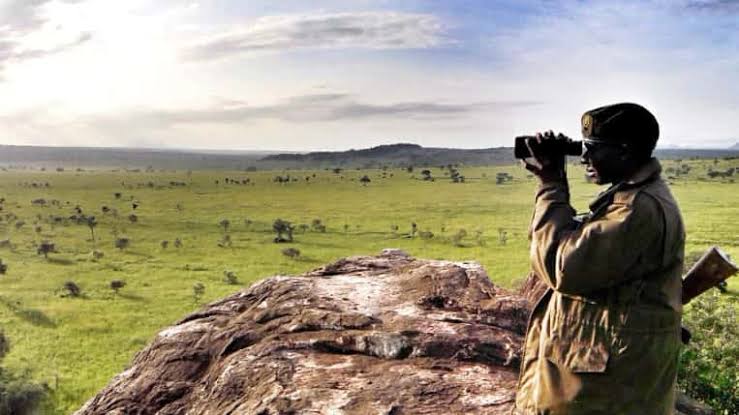
The Narus Valley, in the park’s south around the Apoka tourism hub, holds permanent water and supports the bulk of Kidepo’s game drive circuits, with large buffalo herds, healthy lion prides, and some of the most reliable cheetah sightings anywhere in East Africa.
The Kidepo Valley itself, further north toward the South Sudan border, is drier and more seasonal, its riverbed reduced to open sand for much of the year, framed by the dramatic Morungole mountain range. Wildlife density here is lower, but the scenery and sense of remoteness are considerably more pronounced, and it remains one of the best places in the park for ostrich and greater kudu.
A Birding List Second Only to Queen Elizabeth
Kidepo’s recorded bird list runs to 476 species, the second highest of any Uganda national park, including around sixty species not recorded anywhere else in the country. Species such as the ostrich, kori bustard, Abyssinian roller, and Karamoja apalis, endemic to this park, draw serious birders who might otherwise overlook Kidepo in favour of Uganda’s better-known forest birding sites.
A Genuinely Different Cultural Encounter
The semi-nomadic Karamojong people, cattle-keeping pastoralists with cultural parallels to Kenya’s Maasai, live around the park’s boundaries, while the Ik, one of Uganda’s smallest ethnic groups, inhabit the slopes of Mount Morungole on the park’s southern edge. Guided visits to both communities are arranged through the park’s tourism office and offer a cultural dimension considerably less commercialised than similar experiences near Uganda’s more visited parks.
Where Kidepo Fits on a Uganda Itinerary
Kidepo’s remoteness is the single most important planning factor. By road, expect nine to ten hours from Kampala via Gulu, commonly broken into two days with an overnight stop at Ziwa Rhino Sanctuary, Gulu, or Kitgum. By air, scheduled charter flights operated by Aerolink Uganda connect Entebbe to the Lomej airstrip near Apoka in around two hours, running several days a week rather than daily, so flight schedules need to be built into the itinerary early rather than assumed.
| From | Approx. Distance / Time | Notes |
| Kampala / Entebbe (road) | 9 – 10 hours | Usually broken into two days via Gulu, with an overnight stop at Ziwa Rhino Sanctuary or Gulu. |
| Kampala / Entebbe (air) | About 2 hours | Scheduled charter flights run several days a week; book well ahead. |
| Murchison Falls National Park | Full driving day, or connect via Entebbe by air | Not a natural road link; air transfer is the practical option for combining both. |
Because Kidepo does not sit conveniently on the route to any of Uganda’s other major parks, it is best treated as a dedicated addition to an itinerary rather than a stopover, and we generally recommend flying at least one direction to preserve time for actual game viewing over transit.
When to Visit Kidepo Valley National Park
| Season | Months | What to Expect |
| Dry Season | September – March | Best game viewing as wildlife concentrates around the Narus Valley’s permanent water, most reliable cheetah sightings, temperatures often reaching 40°C by midday. |
| Wet Season | April – August | Lush green landscape and strong birding, but wildlife disperses more widely, making sightings less concentrated. |
Given the heat of the dry season, we recommend structuring days around early morning and late afternoon game drives, resting during the hottest midday hours, a rhythm most lodges in the park are already set up to support.
Budgeting for Kidepo
Kidepo’s costs are shaped less by permit fees, since none of the park’s main activities require the specialised permits that gorilla or chimpanzee trekking do, and more by the transport required to reach it. Non-resident park entry fees are modest, and the charter flight, while a genuine added expense, often works out comparable to two days of vehicle hire, fuel, and driver accommodation for the road alternative once the full cost is compared.
| Tier | Approx. Cost (per person/night, full board) | What You Get |
| Budget | US$60 – 120 | Uganda Wildlife Authority bandas and campsites at Apoka Rest Camp, basic but functional facilities. |
| Mid-Range | US$180 – 320 | Tented camps such as Nga’Moru Wilderness Camp, comfortable facilities with strong Narus Valley views. |
| Luxury | US$400 – 700+ | Apoka Safari Lodge, the park’s premier property, with elevated design and views over the valley from a raised, rocky setting. |
Given how few accommodation options exist inside the park compared to Uganda’s larger reserves, we recommend booking well in advance regardless of budget tier, since availability, not price, is often the deciding factor here.
Where to Stay
- Apoka Safari Lodge, the park’s flagship luxury property, built into rocky outcrops with sweeping views over the Narus Valley.
- Nga’Moru Wilderness Camp, a comfortable mid-range tented option just outside the park boundary near Apoka.
- Kidepo Savannah Lodge, positioned near the Kalokudo gate with both luxury and simpler tented options.
- Apoka Rest Camp, the Uganda Wildlife Authority’s own bandas and campsite, the most budget-friendly option inside the park.
Activities to do in Kidepo Park
- Game drives in the Narus Valley, the park’s most productive circuit, covering roughly twenty-kilometre loops around Apoka with strong buffalo, lion, giraffe, and cheetah sightings.
- Game drives into the drier Kidepo Valley itself, best for ostrich and greater kudu, with dramatic scenery framed by the Morungole range.
- Guided walks in the Namamukweny Valley, a quieter, densely birded side valley despite its name meaning “a place without birds.”
- A visit to the Kanangorok hot springs, roughly thirty kilometres north of Apoka, both a scenic stop and a productive birding location.
- Cultural visits to Karamojong communities and, for the more adventurous, a guided hike up Mount Morungole to meet the Ik people.
Frequently Asked Questions
Is Kidepo worth the long journey to reach it?
For travellers with the time or budget for a charter flight, yes; the wildlife density, species list, and near-total absence of other vehicles set it apart from Uganda’s more accessible parks. For travellers on a tight, first-time Uganda itinerary, the logistics are harder to justify and we generally recommend prioritising Bwindi, Murchison national park, and Queen Elizabeth first.
Can I see cheetah at Kidepo?
Yes, and this is the only park in Uganda where cheetah sightings occur with any regularity, particularly on the open plains of the Narus Valley during the dry season.
Are there rhino at Kidepo?
A small population was reintroduced from Ziwa Rhino Sanctuary in March 2026, marking the start of a recovery programme within the park. The population remains newly established and limited in number, so a sighting should be treated as a possibility rather than an expectation.
How do I get to Kidepo?
By road, the drive from Kampala takes nine to ten hours and is usually split into two days. By air, scheduled charter flights from Entebbe reach the Lomej airstrip near Apoka in around two hours, running several days a week.
What is the best time of year to visit?
September to March, the dry season, offers the best wildlife concentration around the Narus Valley’s permanent water sources. The wet season, April to August, suits birders more than travellers focused primarily on game drives.
Can I combine Kidepo with Murchison Falls?
There is no direct, convenient road link between the two, so most travellers combining them do so via a flight connection through Entebbe rather than attempting an overland route.