Marsabit National Park
Marsabit National Park and Reserve sits atop Mount Marsabit in Kenya’s remote north, roughly 560 kilometres, about seven to eight hours by road, north of Nairobi in Marsabit County. The park covers approximately 1,554 square kilometres and is genuinely unusual within Kenya’s park system for its setting: a dense, forested volcanic mountain rising abruptly from the surrounding arid desert plains.
Overview
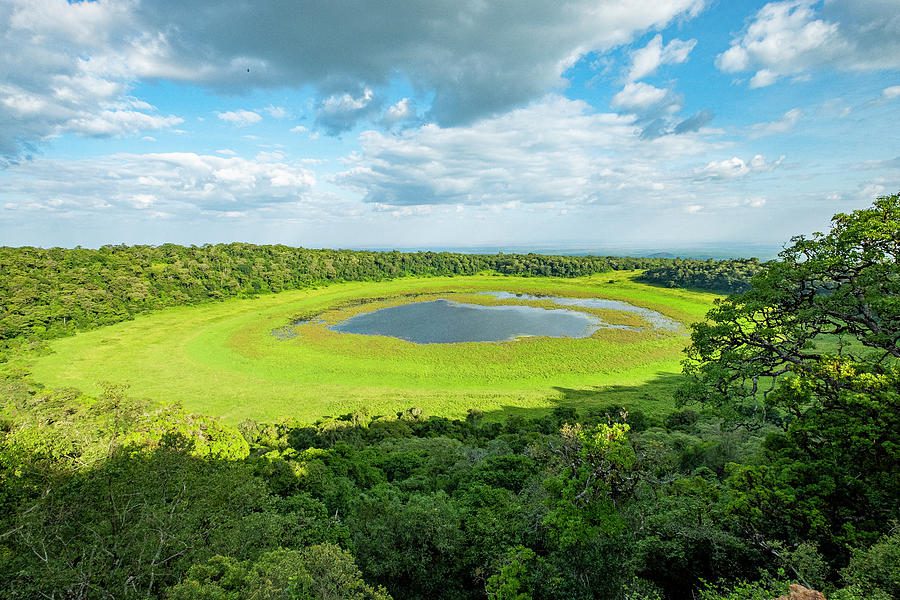
Marsabit is one of Kenya’s most visually surprising parks precisely because of that contrast. The lower slopes and surrounding plains are scorched, dry, and dusty, but climb the mountain itself and you enter a genuinely lush montane forest, cooler and greener than anything the harsh northern desert around it would suggest, dotted with several extinct volcanic crater lakes that provide a haven for birdlife, mammals, and reptiles alike.
The park’s most famous resident was Ahmed, a massive-tusked bull elephant who became a genuine national symbol during his lifetime. His tusks grew so large and so widely known that Kenya’s government placed him under round-the-clock armed protection via presidential decree in the early 1970s, one of the earliest and most public examples of a government directly intervening to protect an individual wild animal from poaching. Ahmed died of natural causes at an estimated age of 63, and a life-size model of him now stands at the National Museum of Kenya in Nairobi.
Marsabit’s remoteness, extremely low light pollution, and genuinely dark night skies have more recently made it a destination for astro-tourism and night wildlife safaris, a niche but growing use for a park that has historically drawn far fewer visitors than Kenya’s more famous southern circuit.
Best Time to Visit
Marsabit’s climate follows a distinct northern Kenya pattern: January through March is hot and dry, April through June is hot and wet, July through October is very hot and dry, and November through December is warm and wet. Wildlife viewing is generally most productive during the drier stretches, when animals concentrate more predictably around the mountain’s forest and crater lakes.
Entry fees are paid through the KWSpay electronic system via MPesa or card, consistent with the rest of Kenya’s national park network, and given the park’s remote, dual Kenya Wildlife Service and Kenya Forest Service management, confirming current rates directly before travelling is worth doing given how infrequently this specific park’s pricing gets updated in general travel resources.
Getting There and Where to Stay
Getting There
Most visitors reach Marsabit via the A2 Highway, a long but genuinely scenic drive north through increasingly arid landscape. The park also connects to Kenya’s wider northern circuit, including South Island and Central Island National Parks on Lake Turkana, via the same road network, making it a feasible stop for travellers building an extended northern Kenya itinerary rather than a standalone weekend destination. An airstrip in Marsabit town, about four kilometres from Abdul Gate, offers an alternative for travellers preferring to fly rather than commit to the long road journey.
Where to Stay
Accommodation options within and around Marsabit are considerably more limited than in Kenya’s southern parks, reflecting the region’s lower visitor numbers, with simple lodges in Marsabit town and basic camping options within the park itself serving most visitors. Travellers should arrange accommodation well in advance given the limited number of properties serving this remote region.
Activities
Marsabit’s activities lean into its remoteness, its forested crater lakes, and its position as one of Kenya’s most genuinely undiscovered parks.
Game Drives
Drives through the mountain’s forest and surrounding plains offer sightings of elephant, buffalo, greater and lesser kudu, Grevy’s zebra, reticulated giraffe, and, with patience, lion and leopard.
Visiting the Crater Lakes
Marsabit’s several extinct volcanic crater lakes, including Gof Redo roughly five kilometres north of Marsabit town, provide a genuinely striking, forested setting distinct from the arid plains surrounding the mountain, and support a wide range of birdlife.
Night Wildlife Safaris and Astro-Tourism
Marsabit’s remote location and minimal light pollution create exceptional conditions for stargazing and night-focused wildlife viewing, a genuinely distinctive activity not widely available elsewhere in Kenya’s park system.
Birdwatching
The park’s forest interior and crater lakes support around 350 recorded bird species, of which 52 are birds of prey, making Marsabit a genuinely rewarding stop for dedicated birders willing to make the journey north.
Hiking
The park’s rugged, forested terrain and generally serene environment lend themselves to guided hiking, offering a genuinely different physical activity from the vehicle-based game drives that dominate most Kenyan safaris.
Attractions
Marsabit’s attractions combine genuine wildlife history with a landscape unlike anywhere else in Kenya’s park system.
The Legacy of Ahmed the Elephant
Marsabit’s most famous resident, a bull elephant with tusks so large he was placed under round-the-clock presidential protection in the early 1970s, remains a powerful symbol of Kenya’s conservation history, commemorated with a life-size model at the National Museum of Kenya.
The Crater Lakes
Several extinct volcanic craters dot the mountain, their lakes providing a lush, forested contrast to the surrounding desert and a haven for birdlife and mammals alike.
Mount Marsabit’s Montane Forest
A genuinely unexpected sight given the surrounding arid landscape, the mountain’s dense forest interior offers cooler temperatures and considerably richer vegetation than anywhere in the immediate region.
The Northern Circuit Connection
Marsabit sits along the same road network connecting to Lake Turkana’s South Island, Central Island, and Sibiloi National Parks, making it a natural stop for travellers building a genuinely extended northern Kenya itinerary.
Dark Skies for Astro-Tourism
Marsabit’s remoteness and minimal light pollution give it some of the clearest night skies available anywhere in Kenya, a growing draw for stargazing and night photography.
Wildlife Highlights
Large-Tusked Bull Elephants
Marsabit remains a genuine refuge for elephants with notably large tusks, a legacy directly connected to Ahmed’s fame and the protective attention the park has received as a result.
Grevy’s Zebra and Reticulated Giraffe
These arid-adapted species, also found further south in Samburu, appear here too, reflecting the shared ecological character of Kenya’s broader northern regions.
Black and White Colobus Monkeys
A genuinely unexpected primate sighting in Kenya’s arid north, these forest-dwelling monkeys inhabit Marsabit’s montane forest, a habitat considerably different from the open plains most visitors associate with northern Kenya.
Fun Facts
- Ahmed, Marsabit’s most famous elephant, was placed under round-the-clock armed protection via presidential decree in the early 1970s, one of the earliest examples anywhere of a government directly intervening to protect a single wild animal.
- A life-size model of Ahmed stands at the National Museum of Kenya in Nairobi, allowing visitors to see the scale of his famously large tusks even after his death.
- Marsabit’s forest supports black and white colobus monkeys, a species more commonly associated with Kenya’s wetter, more southern forests.
- The park’s minimal light pollution has made it an emerging destination for astro-tourism, a genuinely different draw from the wildlife viewing most visitors associate with Kenya’s parks.
- Marsabit is jointly managed by the Kenya Wildlife Service and the Kenya Forest Service, reflecting its dual identity as both a wildlife reserve and a significant forest ecosystem.
Frequently Asked Questions
Why is Marsabit’s elephant Ahmed so famous?
Ahmed’s tusks grew so large that the Kenyan government placed him under round-the-clock armed protection via presidential decree in the early 1970s, making him a genuine national symbol and one of the earliest public examples of direct government intervention to protect an individual wild animal from poaching.
How far is Marsabit from Nairobi?
Roughly 560 kilometres, about seven to eight hours by road via the A2 Highway, or a shorter flight to the airstrip near Marsabit town.
What makes Marsabit different from Kenya’s other northern parks?
Its forested mountain setting, rising abruptly from the surrounding arid plains, along with its several volcanic crater lakes, gives Marsabit a genuinely different landscape from the drier, flatter terrain found at Samburu or further north.
Is Marsabit good for astro-tourism?
Yes, its remote location and minimal light pollution create some of the clearest night skies available anywhere in Kenya, an increasingly recognised draw for stargazing and night photography.
Can I combine Marsabit with Lake Turkana?
Yes, Marsabit sits along the same road network connecting to Lake Turkana’s island national parks, making it a feasible stop for travellers building an extended northern Kenya circuit.