Guide to African Safari Experiences
Guide to African Safari Experiences; The word safari carries an enormous amount of assumed meaning that doesn’t always survive contact with the actual planning process. Ask ten people what a safari involves and most will describe some version of a vehicle, an open plain, and a lion in the distance, a mental image drawn largely from decades of nature documentaries rather than the genuine range of experiences available across the African continent today.
That image isn’t wrong, exactly, but it’s a small fraction of what’s actually on offer, and travellers who arrive at the planning stage without understanding the fuller picture often end up choosing a destination or itinerary structure that doesn’t actually match what they were hoping for.
This guide exists to fill that gap. Rather than recommending a single best safari or destination, which genuinely doesn’t exist given how differently people define a good trip, we want to walk through the actual categories of experience available, vehicle-based game drives, primate trekking, walking safaris, water-based viewing, and more, along with the destinations that do each one best, so that the choices you make from here are based on a clear sense of what you’re actually choosing between rather than a single, oversimplified idea of what a safari is.
Classic Vehicle-Based Game Drives
This remains the foundation of most safari itineraries, and for good reason: a vehicle covers ground efficiently, keeps you safe around genuinely dangerous animals, and, with a skilled guide, delivers reliable access to the Big Five, lion, leopard, elephant, buffalo, and rhino, within a manageable timeframe. Kenya’s Masai Mara and Tanzania’s Serengeti anchor the world’s most famous game-drive circuit, home to the Great Migration’s roughly two million wildebeest and zebra moving in a broadly predictable annual pattern between the two countries, while Tanzania’s Ngorongoro Crater offers an unusually compact, walled ecosystem where all five species can realistically be seen within a single day’s descent.
What varies meaningfully between game-drive destinations isn’t just which species you’re likely to see, but the density and predictability of sightings, the degree of vehicle crowding at popular sightings, and the specific character of the terrain. Kenya’s Amboseli offers open plains with Kilimanjaro as a backdrop; Tanzania’s Tarangire and Rwanda’s Akagera concentrate wildlife dramatically around rivers and water sources during the dry season; South Africa’s Kruger National Park offers one of the only fully self-drive-friendly Big Five ecosystems anywhere on the continent, letting confident travellers explore independently rather than relying exclusively on a guided vehicle.
Primate Trekking: Gorillas and Chimpanzees
Gorilla and chimpanzee trekking occupy a genuinely different category from game drives, trading a vehicle’s range and safety margin for an on-foot approach into forest habitat, culminating in close, regulated observation of a habituated group. Wild mountain gorillas exist only in Rwanda, Uganda, and the Democratic Republic of Congo, with Rwanda offering the shortest, most polished logistics at a premium price, and Uganda offering considerably better value with more habituated families spread across a genuinely varied forest landscape. Chimpanzee trekking, considerably more affordable and physically demanding than gorilla trekking, is available across several sites in Uganda specifically, with Kibale Forest National Park holding the highest concentration and sighting reliability in the region.
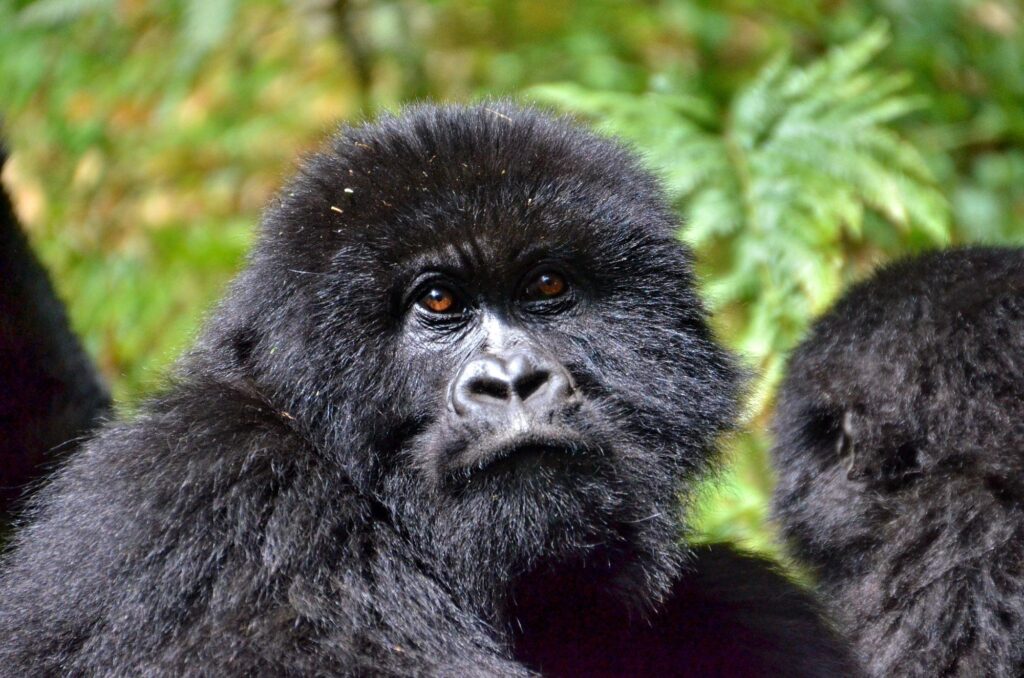
This category rewards travellers willing to accept real physical demands, muddy, steep forest terrain, early starts, and genuine uncertainty around how long a specific trek will take, in exchange for an encounter that vehicle-based viewing simply cannot replicate. It’s also considerably more expensive per hour of actual wildlife contact than a game drive, given the specialised habituation, tracking, and conservation infrastructure that makes the encounter possible and safe for both visitors and the animals.
Walking Safaris and Foot-Based Wildlife Viewing
Walking safaris trade a vehicle’s efficiency for a considerably deeper, slower engagement with tracks, smaller wildlife, and plant ecology, and they’re only available where the presence of dangerous game permits it. Tanzania’s Ruaha and Nyerere National Parks have developed a particularly strong walking safari culture, including multi-day fly-camping options that move the entire experience away from a fixed lodge and into temporary bush camps for genuinely immersive multi-day trips.
Uganda’s Lake Mburo National Park offers a rarer variant again, permitting walking and even horseback safaris across much of its area specifically because it holds no lions and only a low-density leopard population, letting visitors approach grazing zebra and impala on foot in a way that simply isn’t possible in most other East African reserves.
This category suits travellers who’ve often already done a more conventional vehicle-based safari and want a genuinely different register of experience, or those for whom the process and detail of tracking matters as much as the eventual sighting itself.
Water-Based Safaris: Boats, Canoes, and Rivers
Water adds a genuinely distinct dimension to wildlife viewing that a vehicle or a walk can’t replicate, concentrating hippo, crocodile, and dense birdlife along a river or lake’s edge in a way that rewards a slower, quieter approach. Uganda’s Kazinga Channel, linking Lake Edward and Lake George within Queen Elizabeth National Park, and the Nile boat cruise at Murchison Falls, both deliver some of the most reliable wildlife viewing available anywhere in the country, given how much life concentrates along permanent water regardless of season.
Rwanda’s Lake Ihema, within Akagera National Park, offers the only comparable wildlife-focused boat cruise in that country, while Kenya’s Lake Naivasha adds a genuinely different, freestanding boating experience, including access to Crescent Island, a predator-free sanctuary reachable only by boat where visitors can walk among giraffe and zebra without a vehicle.
Canoe-based birding, particularly the shoebill searches at Uganda’s Mabamba Bay Wetland, represents a more specialised subset of this category, trading the comfort of a larger boat for the quiet, low-profile approach a canoe allows, genuinely important for approaching a bird as easily disturbed as the shoebill without startling it before a proper sighting.
Hot Air Balloon Safaris
Launched before dawn and drifting silently over the plains for around an hour, a balloon safari offers a genuinely different perspective on landscapes most travellers have only experienced from a vehicle: herds strung out across open grassland, the sinuous line of a river, and, on fortunate mornings, predators moving in the half-light entirely unaware of the balloon overhead given the complete absence of engine noise. Kenya’s Masai Mara and Tanzania’s Serengeti and Amboseli all offer well-established balloon programmes, typically concluding with a champagne breakfast set up in the bush after landing.
This activity is priced separately from standard game drives, often significantly so, and should be understood as a genuinely optional, experience-focused addition rather than a core part of a wildlife-viewing itinerary, since the aerial perspective, while spectacular, doesn’t offer the close, detailed wildlife viewing that a ground-based drive delivers.
Mountain Climbing and High-Altitude Trekking
Africa’s highest peaks offer a genuinely different kind of safari experience again, physically demanding, altitude-focused, and often only tangentially about wildlife at all. Tanzania’s Mount Kilimanjaro, at 5,895 metres Africa’s highest point, requires no technical climbing skill on its standard routes, making it achievable for prepared hikers of considerably varied fitness backgrounds, though success rates vary enormously by route and itinerary length, from as low as 27 percent on the shortest routes to above 90 percent on longer, better-acclimatised ones.
Uganda’s Rwenzori Mountains offer a more technical alternative, involving genuine glacier travel near the summit, while Mount Elgon and, in Rwanda and Uganda, the Virunga volcanoes offer gentler, non-technical alternatives that pair naturally with primate trekking given their shared location within gorilla habitat.
This category rewards travellers specifically seeking a physical challenge and willing to commit real preparation time beforehand, cardiovascular training, appropriate gear, and, for the more serious climbs, a genuine understanding of altitude sickness risk and acclimatisation strategy.
Birding
For travellers with a genuine interest in birds specifically, rather than birds as an incidental part of a broader wildlife trip, several East African destinations offer concentrations of species rich and specific enough to justify a dedicated itinerary. Uganda’s combined species count, over 1,090, ranks among the highest of any African country, with Bwindi’s Albertine Rift endemics, Semuliki’s Congo Basin specialists, and Mabamba Bay’s shoebill stork offering genuinely different, complementary birding experiences within a single, manageable country. Kenya’s Rift Valley soda lakes, particularly Lake Nakuru, add flamingo spectacles at a scale rarely matched elsewhere, while Tanzania’s Serengeti and Ngorongoro ecosystems offer strong raptor diversity alongside their mammal-focused reputation.
A dedicated birding trip benefits enormously from a specialist guide rather than a general safari guide, given how much detailed, current knowledge of specific calls and recent sightings changes the odds for genuinely difficult target species.
Cultural and Community
Wildlife is rarely the whole story on a well-rounded safari, and most established itineraries now build in some form of cultural engagement alongside game viewing. Maasai village visits across Kenya and Tanzania, Samburu manyattas in northern Kenya, and Batwa cultural experiences around Uganda and Rwanda’s forest parks all offer genuine, if necessarily brief, windows into the communities whose land borders, and in some cases once fully encompassed, today’s protected wildlife areas. These experiences work best when arranged through an established lodge or operator with a genuine, ongoing community relationship, since proceeds are then more reliably shared with the community itself rather than an informal roadside arrangement of uncertain benefit.
Comparing Safari Experience Types
| Experience Type | Physical Demand | Best For |
| Vehicle-based game drives | Low | Reliable, efficient Big Five and general wildlife viewing |
| Gorilla and chimpanzee trekking | Moderate to high | A close, intimate primate encounter unlike any vehicle-based sighting |
| Walking safaris | Moderate | Deeper ecological detail and a slower, more immersive pace |
| Water-based safaris | Low | Concentrated hippo, crocodile, and birdlife along rivers and lakes |
| Hot air balloon safaris | Low | A genuinely different aerial perspective, priced as a distinct add-on |
| Mountain climbing | High | A dedicated physical challenge, often only loosely tied to wildlife |
| Birding-focused safaris | Variable | Travellers with a genuine, specific interest in bird diversity |
Building a Trip That Combines Multiple Experience Types
Most genuinely satisfying safari itineraries, rather than committing entirely to one category, combine two or three of these experience types deliberately, using each for what it does best. A common and effective structure pairs several days of classic vehicle-based game drives with a single gorilla or chimpanzee trek, a boat cruise, and perhaps a balloon flight as a specific highlight, rather than trying to maximise every category simultaneously within a fixed trip length.
The right combination depends heavily on your own priorities, fitness, and the specific countries your itinerary already includes, and it’s worth resisting the temptation to add every available experience type simply because it exists, since a trip trying to do everything often ends up doing each individual thing less well than a more deliberately focused itinerary would.
Matching Experience Types to Traveller Priorities
| Priority | Recommended Focus | Why |
| Maximising Big Five sightings efficiently | Vehicle-based game drives in an established circuit | The most reliable, time-efficient way to see the widest range of large mammals |
| A once-in-a-lifetime primate encounter | Gorilla or chimpanzee trekking | An intimate, close-range experience unavailable from a vehicle |
| A slower, more detailed engagement with ecology | Walking safaris, ideally combined with a game-drive-based trip | Reveals tracks, plant use, and smaller wildlife a vehicle passes over |
| A genuine physical challenge | Mountain climbing, matched to your fitness and available time | Kilimanjaro, the Rwenzoris, or a gentler volcano hike depending on ambition |
| A specific interest in birds | A dedicated birding itinerary with a specialist guide | Maximises access to genuinely difficult target species |
Frequently Asked Questions
What is the most common type of African safari?
Classic vehicle-based game drives remain the foundation of most itineraries, offering efficient, reliable access to the Big Five across established circuits like Kenya’s Masai Mara and Tanzania’s Serengeti.
Is gorilla trekking considered a safari?
Yes, though it’s a genuinely distinct category from vehicle-based game drives, involving on-foot access into forest habitat rather than driving, and it’s typically priced and planned as a separate, specific activity within a broader trip.
Can I combine multiple safari experience types in one trip?
Yes, and this is how most well-planned itineraries actually work, combining game drives with a primate trek, a boat cruise, or another specific activity, rather than committing entirely to a single experience type.
Which safari experience is best for a first-time visitor?
Classic vehicle-based game drives across an established circuit are generally the most reliable starting point, offering efficient wildlife viewing without the specific physical demands or booking complexity of primate trekking or mountain climbing.
Do I need special fitness for a walking safari?
Moderate fitness is generally sufficient for most walking safaris, though multi-day fly-camping expeditions demand more genuine trekking stamina than a standard two-to-three-hour walk.
Is a hot air balloon safari worth the extra cost?
This depends on what you value. The aerial perspective is genuinely unique, but it doesn’t replace close-range wildlife viewing, and it’s priced separately from standard game drives, making it a worthwhile addition rather than a core necessity for most travellers.
How do I choose between so many safari options?
Start with your own priorities, whether that’s efficient wildlife viewing, a specific primate encounter, a physical challenge, or a particular interest like birding, and let that priority guide which experience types anchor your itinerary, rather than trying to include everything available.